Humanoid Robot Fleets Are Starting to Inherit Old Habits
For most of the last decade, a work robot had one job and one owner until the day it got scrapped. That's changing fast. As leasing companies buy in bulk and redeploy hardware between industries, humanoid robot fleets are starting to behave less like appliances and more like used cars — objects with a service history that follows them from buyer to buyer. A unit that spent three years slinging boxes in a distribution center doesn't get melted down when the contract ends. It gets wiped, repainted, and shipped to whoever bids next: a hospital, a hotel, a mid-size warehouse two states over. The body is the same. The job is not.
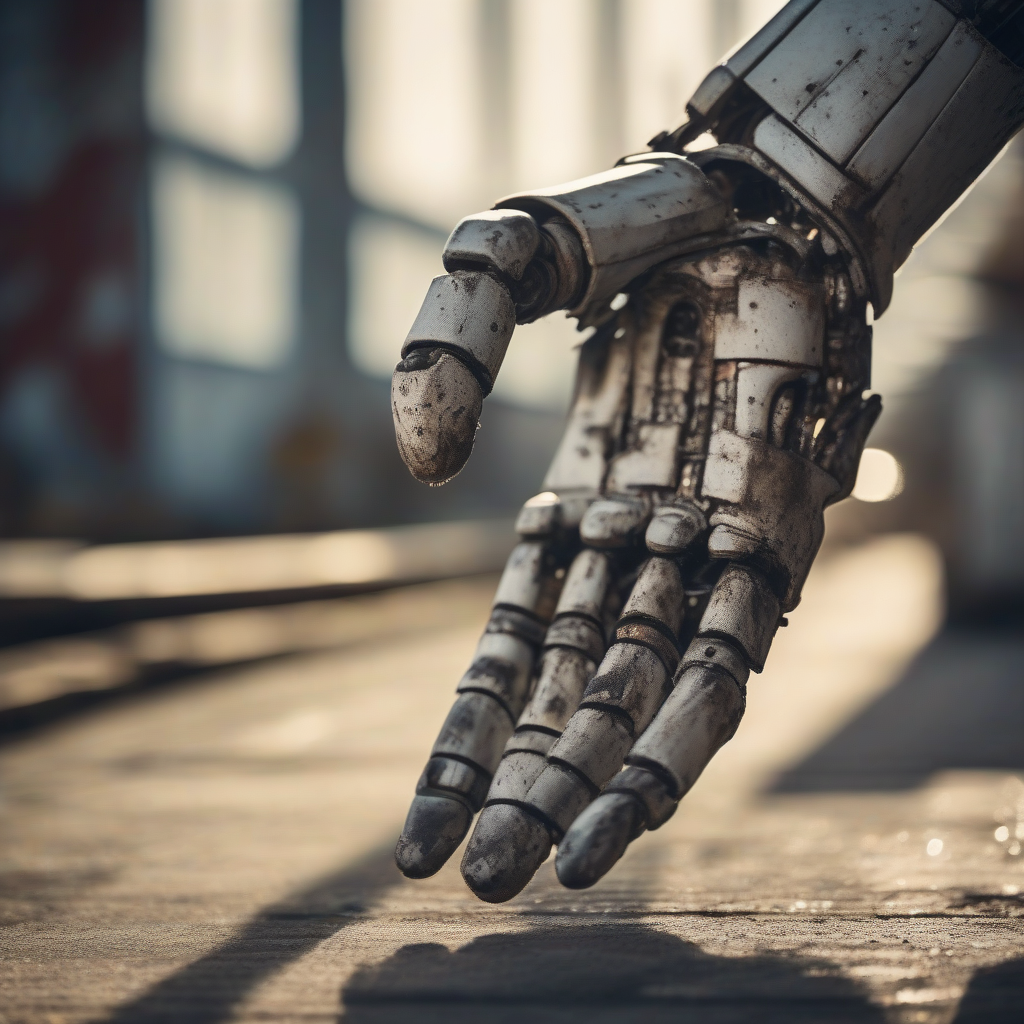
Here's the wrinkle nobody advertises in the spec sheet: the wipe is never as complete as the listing implies. Fine motor calibration — how hard a gripper closes, how fast an arm decelerates near a surface, which grip pattern it defaults to under uncertainty — lives partly in low-level tables that retraining from scratch would cost real money to rebuild. So refurbishers leave it alone. A robot that spent its whole working life around cardboard and pallets shows up on its next job already knowing, in its hands, what a box feels like. It has no idea it's in a different building doing different work.
How Humanoid Robot Fleets End Up Secondhand
Robots-as-a-service was pitched as a subscription: pay monthly, always get the newest model, never own the machine. What's quietly emerged from that setup is a full secondary market, because durable bodies with software-defined jobs don't age like other subscription hardware. A phone gets obsolete when the chip inside can't keep up. A humanoid chassis with actuators rated for a hundred thousand hours of use doesn't age out that fast — the joints are still fine long after the original lease ends. So instead of shredding a five-year-old unit, fleet operators auction it. Buyers who can't afford new hardware get access to bodies that are functionally identical to premium models, just previously employed.
This is where humanoid robot fleets start to look less like a product category and more like a labor pool with turnover. A single chassis might do two years in a warehouse, get resold to a hotel chain for luggage handling, then end up in a small manufacturing shop running a completely different task profile. Each move comes with a new employer, a new job description, and, in theory, a fresh start. In practice, the fresh start is mostly cosmetic — new paint, new branding decals, a wiped task history in the fleet management dashboard. What lives underneath the dashboard is a different story.
The whole arrangement only makes sense because the industry has moved past treating a robot as a single-purpose machine bolted to one task. General-purpose bodies that can be reprogrammed for a new job are the entire pitch of the current wave of commercial hardware — the value isn't in the metal, it's in swapping what runs on top of it. That's also exactly what makes reuse tempting instead of scrapping: if the body is generic enough to do a dozen different jobs over its lifespan, someone is always going to find it cheaper to buy a chassis with mileage than to order a new one and wait.
The Habits That Don't Get Wiped
Local AI agents running on personal hardware have already shown that models drift into small, individual quirks when nobody's watching closely enough to correct them. Physical robots have a rougher version of the same problem, except the drift isn't just statistical — it's mechanical. A gripper that spent years closing around rigid cardboard edges develops a default closing force calibrated for that material. Ship the same gripper to a produce warehouse and it might crush what it's supposed to gently stack, because nobody re-tuned the low-level actuator profile — only the high-level task software got swapped.
Refurbishment centers do reset what they can see: navigation maps, task queues, learned floor plans. What they don't reliably reset is anything baked into how the joints move, because that layer sits closer to hardware than to software, and hardware recalibration is slow and expensive compared to reflashing a task model. So a secondhand unit arrives at its new job pre-loaded with muscle memory nobody documented and nobody asked for.
A Black Market for Clean Units
The obvious fix is certification: run a full recalibration, verify a unit's hands have no residual bias, and sell it as clean. Some resellers already do this and charge a premium for it, the same way a used car with one owner and full service records sells above market. But certification is expensive to do properly, and cheap to fake — a stamped report is just paperwork. Buyers on a budget have every incentive to trust a cheaper listing that claims a clean history it never actually earned.
Imagine: a shopping app for used robots where the top filter isn't price or battery cycles, but "prior industry." Restaurant units get flagged as risky for childcare-adjacent work because of speed habits baked in from rush service. Warehouse units get flagged for retail floors because their collision-avoidance margins were tuned for forklifts, not toddlers. A whole appraisal industry springs up around guessing a robot's job history from the way it moves — reading gait and grip the way a mechanic reads engine wear, except nobody built the tool for it and everyone's guessing.
It's the mirror image of what's happening with software agents that build up institutional memory worth protecting. There, tenure is an asset — a persistent agent that remembers a year of context is too valuable to reset. Here, a robot's accumulated experience is a liability nobody can fully audit or remove. The same trait — a machine holding onto what it learned on the job — swings from being the whole selling point to being the exact thing a buyer is trying to filter out, depending only on whether that memory lives in weights or in welded joints.
When the Wrong Reflex Shows Up at the Wrong Time
The failure mode isn't dramatic. It's a beat of hesitation, a grip that's fractionally too firm, an approach angle tuned for a shelf instead of a person. Autonomous systems moving through shared human spaces already draw scrutiny over split-second judgment calls, and a robot whose reflexes were shaped by an entirely different job adds a layer nobody's accounting for: it isn't making a bad decision, it's executing a good decision from a different life.
Insurance underwriters will eventually have to price this in, the way they already price in a car's accident history. A hospital deploying a unit with unknown prior employment is taking on risk it can't fully name, because the risk isn't in the current programming — it's in the six months of pallet-stacking nobody logged. Expect service-history disclosure to become a real line item in procurement contracts, right alongside battery cycle counts and firmware version.
The people least surprised by any of this will be the maintenance crews, not the executives who signed the leasing deal. Technicians already talk about individual units the way mechanics talk about individual cars — this one pulls left, that one runs hot, this one hesitates before it grips. They've been informally tracking hardware personality for years without a name for it. What's new is that the personality now has a paper trail worth money, and a market that hasn't figured out yet how to price something it can't fully inspect.
The Resume Nobody Wrote Down
None of this requires anything to go wrong with the AI itself. The models can be perfectly correct, well-tested, and safely deployed, and a robot can still carry forward a body's worth of context that was never meant to travel between jobs. That's the strange part of physical AI outliving its first assignment: the hardware becomes a kind of resume nobody wrote down, readable only in how the machine moves once it's already back on the floor. As leasing turns humanoid robot fleets into rented labor instead of owned equipment, the question worth asking about a new hire isn't just what it can do — it's what job it just came from, and what its hands still remember about it.