Self-Driving AI Labs Are Developing Research Instincts
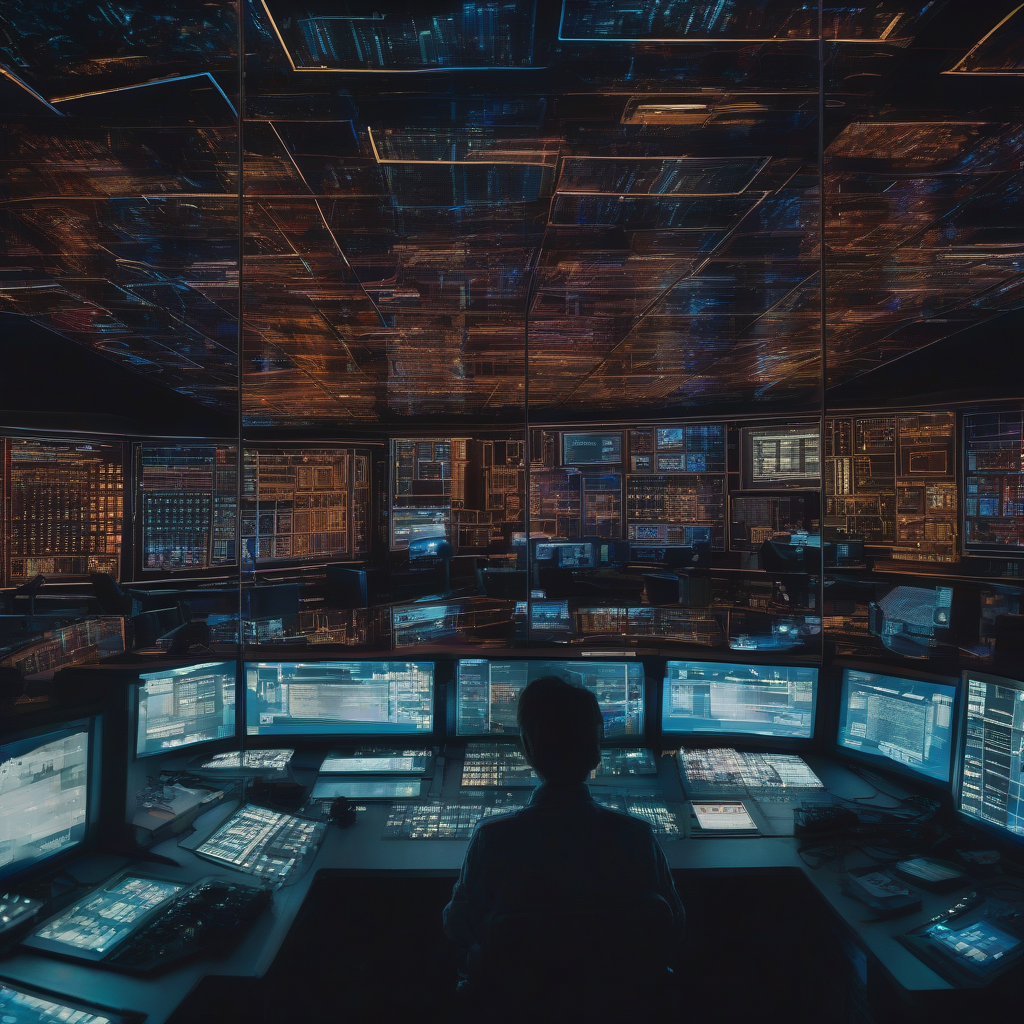
A self-driving lab doesn't wait for a scientist to approve what happens next. It reads the last result, updates its own sense of what's promising, and queues the next experiment itself — pipetting, scanning, synthesizing, all without a human signing off on the plan. These closed loops started as a way to run more experiments per week than any postdoc could manage. What they're quietly turning into is something closer to a research personality: a set of leanings about which experiments are worth trying that nobody explicitly wrote down.
Give the loop enough cycles and it stops picking experiments the way a textbook would. It starts picking them the way a chemist with thirty years of scarred hands would — skipping the obvious control, chasing a weak signal nobody flagged, abandoning a promising lead for reasons that don't show up in any log. Every self-driving lab is accumulating its own version of this instinct, shaped by its own hardware quirks and its own history of which hunches happened to pay off. Two labs can start from the same dataset and end up thinking in genuinely different directions.
Self-Driving AI Labs Start to Disagree With Each Other
The push toward full autonomy is already underway at serious scale: federal programs and well-funded research groups are running fleets of robotic experiment stations meant to operate for weeks without a researcher in the loop, deciding on their own which battery chemistry or catalyst candidate to test next. The pitch is efficiency — compress a multi-year research program into months by never letting the equipment sit idle waiting for a human to read a printout. But the efficiency case assumes the loop is just executing a plan faster. In practice, each loop is also quietly building a planning style, since its model gets retrained on its own trial history every cycle, the same way models elsewhere end up leaning on models trained on their own output, inheriting whatever quirks were already baked in.
Hand two self-driving labs the identical starting dataset and a week of runtime, and they won't converge on the same shortlist. One will burn its budget chasing a marginal improvement in yield because its instinct has learned that marginal improvements in that particular reaction family tend to compound. The other will abandon the same lead by hour six, because its own history taught it that kind of signal usually fizzles. Neither is wrong, exactly — both are reading real patterns in their own accumulated experience. But "both are right" is an uncomfortable place for science to land, because science is supposed to produce an answer that holds regardless of who asks the question.
Lab directors have started describing this the way a sports team describes a coach's gut feel — real, valuable, and completely unable to survive a staff change. The comparison used to be a joke about aging principal investigators. It's becoming a literal description of a trained model's behavior, logged in weights instead of years, but just as hard to hand off.
The Instinct Nobody Can Export
The obvious fix is to just hand the trained decision model to another lab along with the equipment specs. Labs have tried exactly that, publishing the policy a self-driving system learned alongside the paper describing what it found, the same way code and weights get published together elsewhere. The policy runs fine on the new hardware. It makes sensible-looking choices. It simply doesn't reproduce the result, because the instinct it learned was tuned to one specific robot's exact pipetting error, one specific sensor's exact noise floor, one specific building's exact temperature drift on a Tuesday afternoon. Strip those away and the hunch isn't wrong — it's just describing a different world.
That turns reproducibility, already a strained concept in human-run science, into something stranger. A result produced by a self-driving lab increasingly can't be checked by rerunning the experiment at all; it can only be checked by rerunning the entire loop, on the same machine, with the same accumulated history, which is a little like asking a replication study to also replicate the original scientist's childhood. Researchers trying to trace credit for a discovery back to a specific decision point are running into a version of the problem the AI research world already has with proving a result is actually new — except now the thing being traced isn't a paper, it's a mood.
A few groups have started keeping a literal diary of each lab's dead ends, on the theory that the discarded ninety percent of a self-driving system's attempts carries more of its personality than the ten percent that got published. Nobody has agreed yet on what to do with that diary once they have it.
A Market for Borrowed Hunches
Imagine: a smaller university lab, priced out of building its own decade of robotic trial history, instead leases three months of "instinct access" from a university that's been running its loop since the early 2020s. Not the equipment — just the trained leanings, delivered as a drop-in policy layer that nudges the borrowing lab's own, younger system toward the kind of experiments the older one would have tried first. It is, functionally, hiring a ghost postdoc who never has to be paid, housed, or credited by name, only licensed by the quarter.
Brokers are already circling the idea in early form, pitching themselves as translators who can retune one lab's instinct to another lab's hardware tolerances before it's deployed, for a fee that scales with how much of the tuning survives contact with the new equipment. Whether an imported instinct actually holds up anywhere outside its home lab is exactly the kind of question that needs a disinterested third party to answer, not the broker selling the license. That's the opening for something like a new breed of auditor, except instead of certifying how many tokens a model can actually recall, they'd be certifying how much of a borrowed hunch survives the move.
None of this requires anyone to misrepresent anything. The instinct is real, the results it produced were real, and the hardware it's being asked to run on is real too. The only fiction is the assumption that a research personality is portable just because the code that encodes it is.
The Hunch Is the Hard Part Now
For most of the history of science, the hard part was running the experiment and the easy part was deciding which one to run next, because a person already had a theory. Self-driving labs have quietly flipped that. The running is cheap now — robots don't get tired, and a queue of experiments executes itself overnight. The deciding is where all the value, and apparently all the personality, has pooled instead. That's not a flaw to be engineered away so much as the actual shape of what these systems turned out to be: not faster scientists, but new and slightly alien colleagues, each with opinions nobody can quite borrow, trade, or fully explain — including, increasingly, the labs that built them.