Humanoid Robot Training Data Has a Secret Choreographer
Somewhere right now, a person wearing a sensor suit is folding the same towel for the four hundredth time today. They are not doing laundry. They are generating humanoid robot training data, and the fold they just did — the particular way their wrist flicks the corner, the half-second pause before they square the edges — is headed into a dataset that will teach a machine to fold towels in houses that person will never enter.
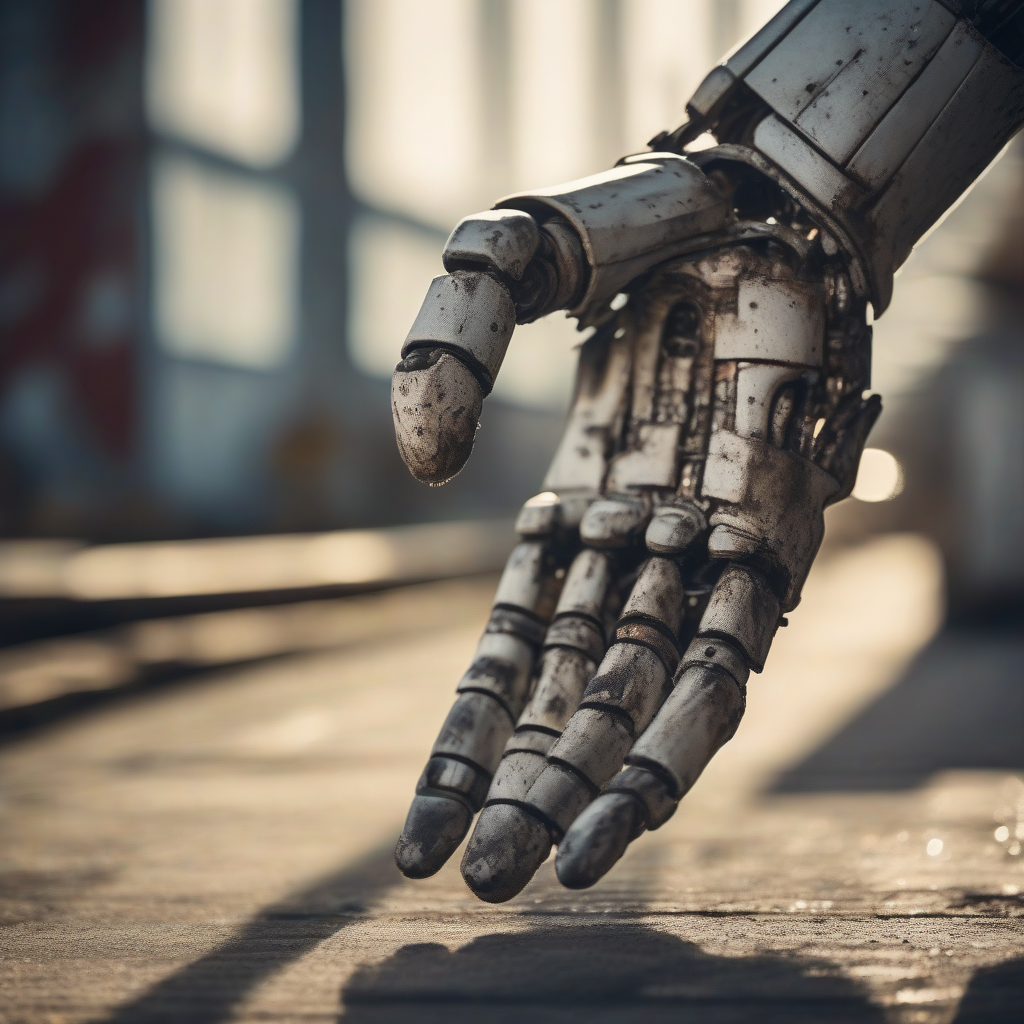
This is the unglamorous reality behind the humanoid robot boom: before a robot can act like a person, something has to show it, over and over, exactly what a person's body does. Camera arrays and motion suits capture the workers. The workers get paid by the hour or the task. The robots get something subtler than instructions — they get a style.
Nobody designed this as a labor-rights question. It arrived as a data pipeline problem, solved the fastest way available: hire people, wire them up, and run the tape. But a pipeline that captures someone's exact physical mannerisms and reproduces them at scale is doing something stranger than data collection. It's recording a body and shipping copies of it.
The gig economy learns to move
Training facilities for humanoid robot training data already look like gyms crossed with call centers. Workers in exoskeletons and VR headsets perform repetitive physical tasks for hours: stacking boxes, wiping counters, carrying trays, climbing stairs. Some facilities run in shifts, recording tens of thousands of motion sequences a day, because a robot that moves convincingly needs orders of magnitude more physical examples than a chatbot needs sentences.
The pay structure looks like any other gig platform — per-session rates, bonus tiers for "clean" takes, leaderboards for workers whose motion gets accepted without reshoots on the first try. What's different is the product. A rideshare driver's shift ends when the car is parked. A motion-capture worker's shift ends when their particular way of reaching, bending, and recovering balance has been extracted, labeled, and queued for training — and it doesn't stay queued. It gets used again. And again. In a market already restructuring entry-level work (as decoy jobs aimed at young workers show), this is one of the odder lanes: a job whose output is your own body, licensed indefinitely.
Workers rarely see what happens next. They sign a release, get paid, and go home. The dataset doesn't go home. It goes into a training run, then a checkpoint, then a shipped robot, then a few hundred thousand shipped robots, each one carrying a faint trace of a specific person's gait.
When your gestures become a commodity
Here's the part that should worry anyone who's ever been self-conscious about how they walk: individual movement style doesn't disappear in a big dataset. It survives, blended with everyone else's, in the way a smoothie still tastes a little like whichever fruit you used most. Robot movement researchers have started noticing their machines pick up composite tics — a particular pause before turning, a characteristic way of recovering from a stumble — that trace back to whichever handful of workers contributed the most footage in that category.
Imagine: a robotics company realizes its entire product line has inherited one specific worker's slightly lopsided stride, because she was the fastest, most consistent performer in the training facility and her sessions got reused across a dozen training runs. She never signed anything about becoming the default gait of a consumer robotics brand. She was paid for Tuesday's shift. The company now has a household name built partly out of her body, and there is no line item for that on anyone's invoice.
A handful of workers are starting to notice their own movement coming back at them — in a product demo, a trade show floor, a neighbor's delivery robot — and recognizing a gesture that is unmistakably theirs, performed by a machine that has never met them. There's no legal category for this yet. It isn't quite a voice clone, it isn't quite a likeness, it's a slower and more diffuse kind of being-copied, and the training pipelines that make synthetic data inbreeding possible for text models now have a physical-movement equivalent, inheriting and compounding one person's quirks across an entire robot generation.
The movement licensing market nobody announced
Speculative scenario: within a few years, a quiet secondary market opens for licensed movement signatures, the way stock photography opened a market for licensed faces. A chef with an unusually efficient knife technique gets scouted specifically for her motion, not her cooking. A retired dancer discovers his decades-old gait data, captured for an unrelated project, has become the gold-standard "confident elderly walk" baked into half the eldercare robots on the market, and starts fielding licensing calls from companies he's never heard of.
A black market forms on the other side: workers who deliberately perform a flatter, more generic version of themselves to avoid being identifiable later, because getting "recognized" in a robot's walk has started to feel less like fame and more like exposure. Some data brokers start selling "anonymized" movement — blended from enough sources that no single contributor's signature survives — as a premium, privacy-safe tier, at a markup over raw capture.
Meanwhile, the robots themselves start drifting. When a training set blends hundreds of workers' versions of the same task, the model doesn't average cleanly toward some efficient ideal; it settles into a kind of consensus gait, nobody's and everybody's, slightly uncanny because it was never any one person's way of moving. Engineers who've watched this up close describe it the way you'd describe managing a team you never hired: a workforce assembled by accident, whose habits you now have to live with.
Who gets credit for a walk
The honest version of this story has no villain, just a supply chain that moved faster than the question of ownership. Nobody sat down and decided that a towel-folder's wrist flick should become unpaid, permanent intellectual property. It happened because motion is cheap to capture and expensive to synthesize any other way, and the industry needed bodies before it needed a policy for what happens to the data those bodies produce.
What's coming, probably, is some version of what music did with sampling: a recognition that a few seconds of someone's distinct output, reused at scale, is worth something even when it's blended past the point of obvious recognition. Until then, the gig workers generating humanoid robot training data are doing something closer to unpaid choreography than data entry — teaching machines not just what a task looks like, but what it looks like when they do it. The machines are keeping the lesson. The teachers go home with a day rate and no idea how far their particular way of moving through the world is about to travel.