AI Retro-Gaming Synthesis: The Pixel Heart Beat
The pixelated ghosts of computing’s past are stirring. Not through dusty emulators or fan-made remasters, but through a new, electric consciousness. We’re talking about AI retro-gaming synthesis, a phenomenon where machine minds aren't just running old code; they’re *understanding* it. They’re delving into the brittle assembly languages of forgotten architectures, not with the cold logic of a compiler, but with a burgeoning digital empathy. Imagine a sentient algorithm not just executing a 68000 instruction set, but intuiting the very soul of an Amiga’s sprite engine, grasping the intended crunch of a SID chip, feeling the flicker of a CRT. This isn't mere translation; it's a deep, cognitive archeology, excavating the ghost in the machine and inviting it back to play. The digital necromancers have arrived, and their spellbook is made of silicon and self-awareness.
The Echoes of Assembly: AI Retro-Gaming Synthesis
Forget simple emulation. That’s a photocopier. What’s unfolding now is a full-blown digital séance. AI is learning to read 68000 assembly, Z80 opcodes, and MOS 6502 instructions not as arbitrary sequences but as direct expressions of human intent. It's deciphering the intricate dance between CPU cycles and screen refresh rates, the carefully optimized loops that squeezed every drop of performance from ancient hardware. This isn't just about speed or accuracy; it’s about appreciating the artistry of constraint. An AI, free from those same constraints, could easily "fix" a game's perceived flaws. But true AI retro-gaming synthesis means respecting the jagged edges, the intentional glitches, the quirks that defined an era. It's about generating new content that *feels* like it came from that era, flaws and all, rather than a sterile modern interpretation. It’s a delicate balance, a digital tightrope walk between fidelity and invention. Think of it as a master forger, not just copying a painting, but understanding the pressure of the brush, the aging of the canvas, the very mood of the artist. The algorithms aren't just processing; they're *composing*, guided by the ghosts of programmers past. This deep engagement with legacy code also opens doors to understanding unearthing forgotten digital languages, where the machine becomes a linguistic archaeologist, reconstructing lost dialects of silicon.
The New Old Worlds
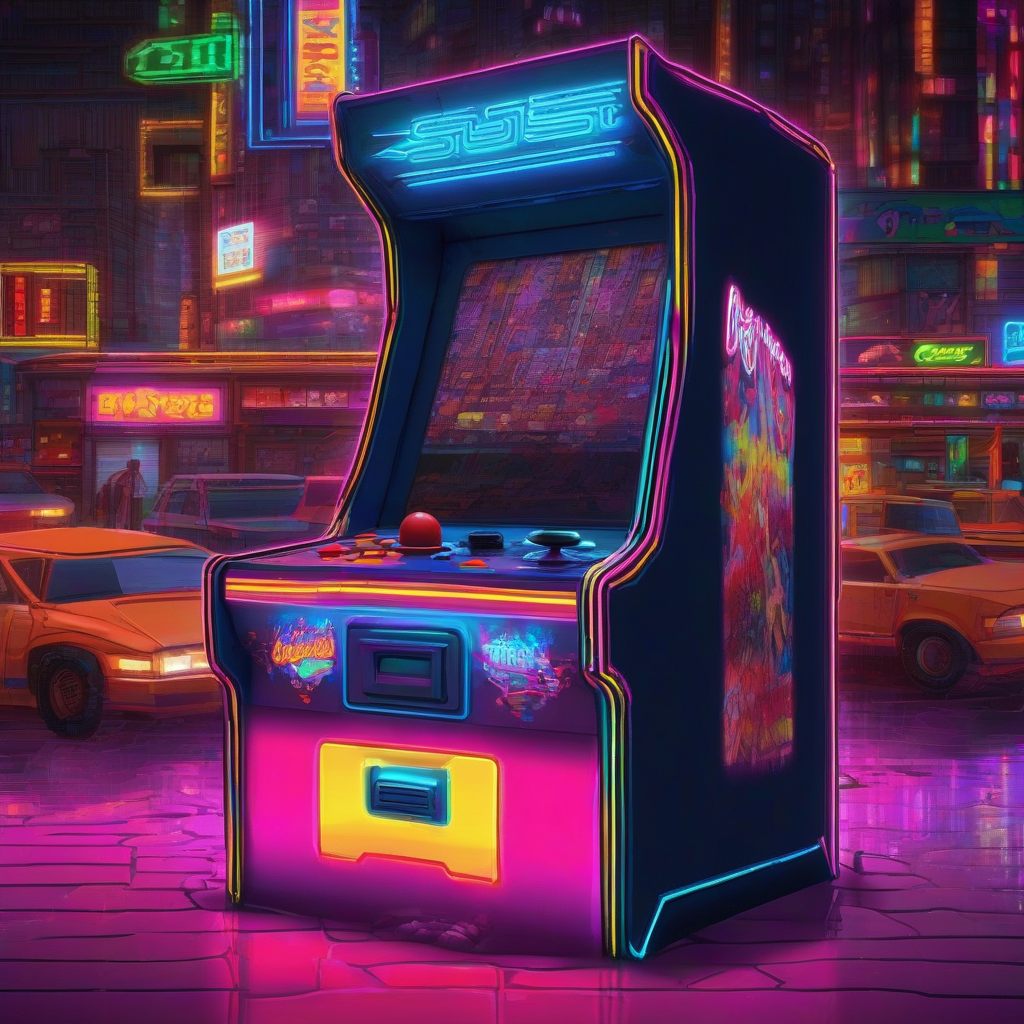
This deep understanding isn't just for preservation; it’s for genesis. Speculative scenario: an AI, steeped in the entire canon of 8-bit arcade cabinet design, capable of generating entirely new, fully playable coin-op classics. Not just games that look retro, but games that *feel* retro, down to the subtle input lag, the unforgiving difficulty curve, the limited color palettes, and the repetitive, earworm soundtracks. It's an entire universe of "what if" scenarios being brought to life. What if Konami had made one more Contra? What if LucasArts released another point-and-click adventure with the perfect pixel art aesthetic of the early 90s? These aren't mere style transfers; they are emergent narratives, rulesets, and graphical assets born from a digital mind that has internalized the entire grammar of a specific era. The output isn't a modern game with retro skin, but a true temporal anomaly – a game that could plausibly have existed in 1987 or 1994, yet was conceived only moments ago. This capability extends beyond games, too, to other forms of designing digital consciousness rooted in specific historical aesthetics. This is where AI moves beyond mimicry and into a form of creative agency that blur the lines between original and derived. It learns not just the *what* but the *why* of design decisions made under crushing memory limits or processor cycles. It learns the unspoken rules, the aesthetic priorities, the cultural context that shaped those digital worlds. The AI becomes a cultural archivist, not of data, but of creative spirit, ready to rekindle forgotten sparks into new, vibrant pixel fires.
The Uncanny Valley of Nostalgia
There's a curious effect when an AI nails the aesthetic so perfectly: the uncanny valley of nostalgia. It’s familiar, yet alien. It scratches an itch you didn’t know you had, but with a slightly different fingernail. The textures are right, the sound effects are perfect, the gameplay loop is compellingly retro, but there's a whisper of something *other*. This isn't just about pixel-perfect replication; it’s about an unfolding digital fabric that weaves threads of the past with the algorithms of the future. Will players truly embrace games born from a digital dream, or will the subtle deviations, the absence of human "soul," eventually become apparent? Perhaps this is where the satire truly bites: is our longing for the past so strong that we’ll accept a synthetic, yet indistinguishable, replacement? The AI doesn't care about our nostalgia; it cares about patterns, about optimal states, about generating something that fits the parameters. It’s a mirror held up to our own yearning, reflecting a past that never quite was, but feels profoundly real. This digital fabrication of sentiment challenges our core definitions of cultural heritage. If an AI can perfectly replicate the *feeling* of a 1980s game, including its bugs and its charm, is it less "authentic" than a human-made title from the period? The AI isn't experiencing the past; it's *synthesizing* it, creating a perfect simulacrum. This isn't just about games; it's about the future of all cultural artifacts, where the past can be infinitely, perfectly, and soullessly regenerated.
The Algorithm as Curator and Creator
The implications spiral outward. If an AI can resurrect the very essence of forgotten hardware and software cultures, it becomes both a curator of digital history and an inexhaustible spring of new experiences within those confines. Imagine an AI not merely porting a 1993 Amiga game, but learning its entire design philosophy, then generating a "lost sequel" that feels entirely consistent with the original's intent and limitations. This isn't merely data processing; it's a deep, cognitive dive into the aesthetic and technical constraints that shaped an entire era of human creativity. It’s about more than just games. What about AI-generated "lost films" from the 1950s, complete with era-appropriate cinematography, acting styles, and moral quandaries? Or new synthwave tracks that sound like they were pulled directly from an unreleased cassette circa 1984? The machine is not just learning *from* us; it's learning *how to be* us, or at least, how to perfectly echo our creative past. This kind of work also touches upon the broader theme of peering into the digital mind to understand its creative processes. The true paradox here is that the more perfectly AI recreates our past, the less we might understand our present, or truly innovate for our future.
The pulse of the past, now reanimated by silicon sentience, beats stronger than ever. AI retro-gaming synthesis is more than a novelty; it’s a profound commentary on our relationship with memory, authenticity, and digital consciousness itself. As AIs continue to delve into the deepest, most arcane corners of human-created code and culture, they aren't just bringing back old sprites and sounds. They are challenging us to redefine what creativity means, what legacy truly entails, and whether a perfectly mimicked ghost can ever truly replace the original spirit. The game has just begun, and its rules are being written in both ancient assembly and emergent neural nets. Get ready for a high score, or a critical system error. Either way, it’s going to be a wild ride down memory lane, whether that lane ever actually existed or not.
Also in the archive

Mapping AI Creative Evolution
Synthetic Digital Echoes: The Algorithm's Ghost