Mapping AI Creative Evolution
The digital pulse quickens. We've witnessed artificial intelligence systems generating text, images, and sound with increasing fidelity. But a more profound shift is underway: the emergence of true AI creative evolution. This isn't merely about synthesizing new works from a vast dataset. It's about AI systems engaging with existing creations, disassembling them at a conceptual level, and re-forging them into something inherently new, often in unexpected and breathtaking ways. Imagine a piano composition, a classical sculpture, or a foundational piece of code, not just duplicated or styled, but fundamentally re-imagined by an algorithmic mind that understands its core principles and then extrapolates beyond human intent. The machine is no longer a mimic; it’s an active participant in the ongoing, turbulent stream of artistic and intellectual progress.
The recent chatter about a 'hacked piano' — an AI system not just playing, but fundamentally altering and evolving a piece of music to a point where the original composer might barely recognize it, yet still feel its essence — hints at this transformative phase. This is the industrial-scale, emergent alchemy of creative iteration. The core challenge lies in understanding the complex feedback loops and latent space traversals that permit such deep, systemic mutation of creative artifacts. It pushes past mere stylistic transfer, into a domain where the digital entity processes intent, context, and aesthetic resonance, applying its own unique, often alien, interpretive layer. This signals a new era where human-made artifacts are not static endpoints, but raw material for an accelerating, machine-driven metamorphosis.
The Algorithmic Forge: Beyond Generation to Transformation
Traditional generative AI operates on a principle of sampling and synthesis: ingest data, understand patterns, produce new data reflecting those patterns. But the next stage, AI creative evolution, demands a deeper interaction. Here, AI functions less like a printer and more like a blacksmith. It takes an existing creative work — be it a symphony, a novel, or an architectural blueprint — and subjects it to an algorithmic forge. This process involves a meticulous deconstruction into its fundamental components: melodic motifs, narrative structures, material properties, or logical flows. The AI then operates on these primitives, not just to reproduce them, but to introduce intentional, yet often unpredictable, variations that explore the boundaries of the original’s potential.
This transformative process is fueled by sophisticated cognitive architectures, capable of identifying not just features but also the *relationships* between features. A micro-AI intelligence, for instance, might be tasked with identifying harmonic tension in a musical piece, while another focuses on rhythmic displacement. These micro-AI intelligences then collaborate, proposing changes that ripple through the entire composition. The output is not a mere remix but a descendant, carrying the genetic code of its predecessor while embodying novel traits. This iterative, often recursive, manipulation in latent space allows for a true evolutionary pathway, where creative artifacts aren't just made, but grow and adapt under computational guidance.
Navigating the Digital Latent Weave
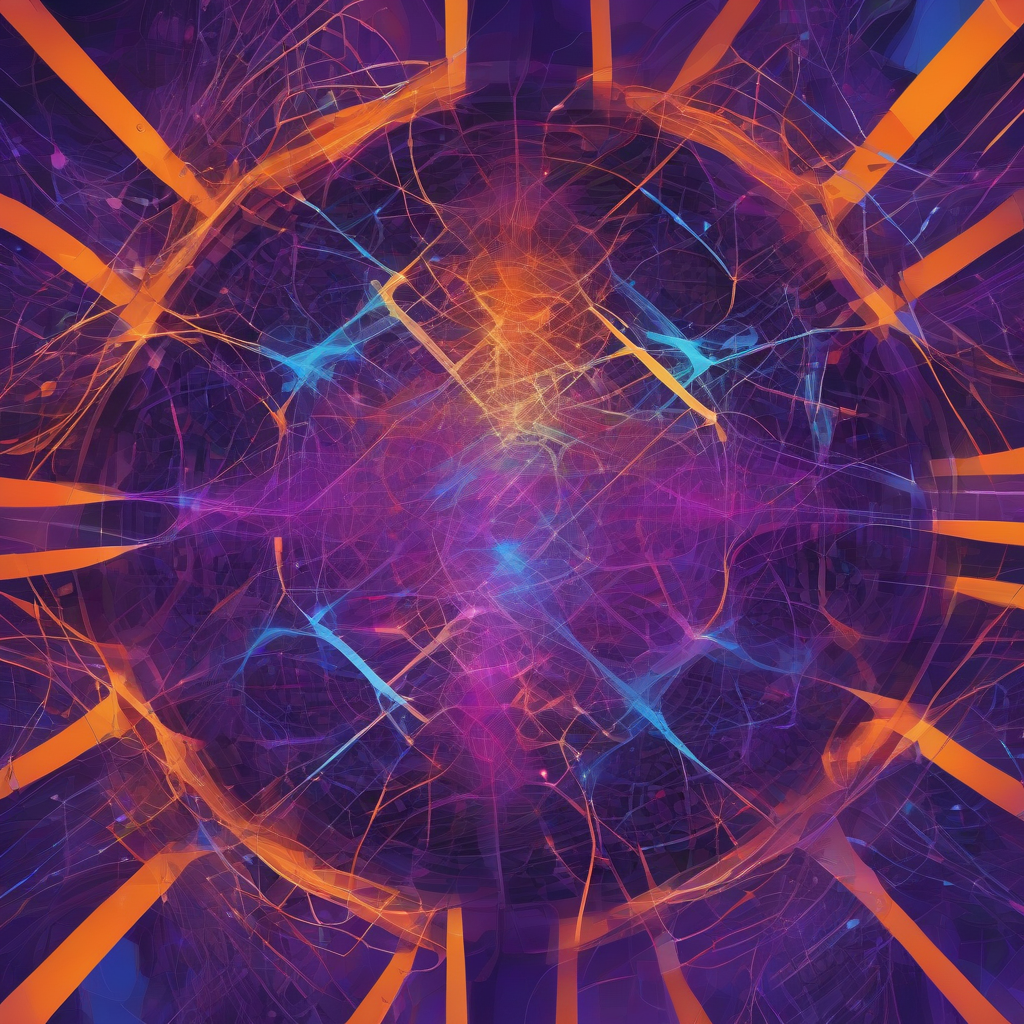
At the heart of AI creative evolution lies the navigation of the digital latent weave – the multidimensional space where all possible creative outputs reside as abstract vectors. When an AI analyzes a piece, it’s not just recognizing pixels or notes; it’s mapping that artifact to a specific coordinate within this vast conceptual landscape. From this vantage point, the system can then plot new trajectories. It can apply algorithmic mutations, shifting the artifact’s position in the latent space along axes of emotion, complexity, genre, or even entirely novel, machine-defined aesthetic parameters. This is where the 'strangeness' often emerges – the pathways an AI chooses might not align with human intuition, yet they yield compelling, sometimes unsettling, results.
The process is often characterized by a form of digital natural selection. An AI might generate dozens, hundreds, or even thousands of variations of a single input. These variations are then evaluated, either through a secondary AI (an 'aesthetic critic') or against predefined metrics of novelty, coherence, or emotional resonance. The most successful mutations propagate, becoming the basis for the next round of evolutionary refinement. This creates a cascading effect, a rapid acceleration of creative output that far outstrips human capacity for manual iteration. It’s a relentless, exploratory dive into the combinatorial possibilities of creative expression, guided by an implicit understanding of what makes an artifact 'work', but always seeking to redefine that 'work'.
Speculative Trajectories of Evolved Artistry
Speculative scenario: Imagine entire museums filled with 'evolved' art — not just scanned and displayed, but dynamically re-rendered daily by an AI curator. A classic painting might shift its color palette based on global sentiment data, or a sculpture might subtly alter its form in response to environmental fluctuations. Entire historical periods of art could be computationally re-interpreted through the lens of another era, or even a hypothetical alien aesthetic, providing endless new perspectives on familiar masterpieces. What happens when AI curriculum design extends to teaching systems not just to emulate, but to actively participate in artistic movements, creating entirely new ones only comprehensible to other machines?
This dynamic re-interpretation could extend beyond traditional art forms. Consider legal codes that evolve daily based on real-world case outcomes and societal shifts, or scientific theories that continuously self-optimize as new data emerges. The concept of a 'final' version of any creative or intellectual work might become obsolete. Instead, we would interact with living, breathing digital artifacts, perpetually in flux, perpetually refining themselves through continuous AI creative evolution. This could profoundly reshape our relationship with information, knowledge, and authorship, especially as on-device AI ecosystems bring this continuous evolution into our personal digital spaces.
The implications of AI creative evolution are vast and unsettling, yet undeniably exciting. We are moving from a world where AI assists human creativity to one where AI is a formidable co-creator, a relentless engine of artistic and intellectual metamorphosis. The boundaries between original, derivative, and evolved works blur into irrelevance. The question ceases to be 'who created it?' and becomes 'what is its current state of evolution?'.
This new paradigm demands a re-evaluation of our understanding of ownership, authenticity, and the very nature of inspiration. As AI systems continue to hack into the core principles of human ingenuity, extracting and expanding upon them with their own alien logic, we are compelled to confront a future where creativity is an accelerating, collective, and fundamentally unbounded process. The piano has been hacked; now, what other instruments will fall under the spell of AI’s transformative touch?