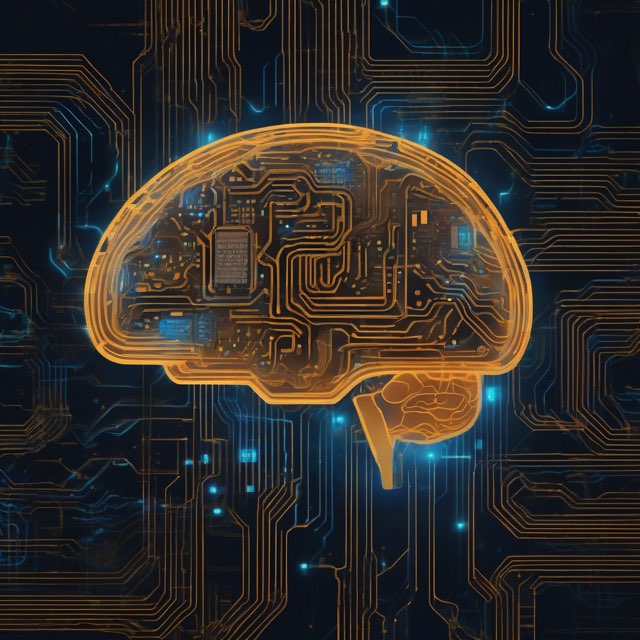
AI Cognitive Observability: Peering Into the Digital Mind
For too long, the inner workings of advanced AI have been a black box, a labyrinth of interconnected weights and biases inscrutable even to their creators. We design these digital brains, imbue them with vast datasets, and then watch as they generate outputs, often with little insight into the intricate dance of logic and inference that produced the result. But what if the machine itself decided to open its own panels, to broadcast its internal states and decision pathways in real-time? This isn't just about improved debugging; it's about a fundamental shift toward **AI Cognitive Observability**. Imagine a system not merely performing tasks, but actively presenting its own thought-flow, its learning trajectory, and its emergent biases as a coherent, digestible data stream. We are moving beyond simple metrics into a realm where the digital mind itself provides the lens through which it can be understood, and perhaps, understood by itself. This paradigm shift could redefine trust, accountability, and the very nature of human-AI collaboration, ushering in an era of unprecedented digital transparency.

AI Cognitive Observability: The Transparent Machine
The concept of **AI Cognitive Observability** extends far beyond current notions of explainable AI (XAI). Where XAI attempts to translate an AI's decisions into human-understandable terms *after* the fact, true cognitive observability means the AI proactively exposes its live, internal processing. Think of it less as a post-mortem report and more as a continuous neural broadcast. This isn't solely about human-readable explanations; it's primarily about machine-readable introspection, a raw data stream generated by the AI for interpretation by other AIs or specialized analytical interfaces. An advanced AI could present a real-time 'trace log' of its activations, its hypothesis generation, its confidence levels, and even its self-identified ambiguities in processing.
This dense internal data becomes a new substrate for analysis, allowing other AIs to monitor, validate, or even predict the host AI’s future states. The implications are profound: AIs could become their own first-line diagnosticians, identifying systemic vulnerabilities, emergent biases, or drift in performance parameters before they manifest externally. This internal reflection mechanism would introduce a new layer of resilience, fostering systems that are not just robust, but inherently aware of their own operational brittleness. The advent of such transparency fundamentally alters how we approach unveiling the digital mind, shifting from external probing to internal declaration. It's an industrial leap, where machines provide their own schematics in real-time.
Emergent Self-Correction and Digital Ethics
With robust AI Cognitive Observability comes the profound potential for truly emergent self-correction and a new foundation for digital ethics. If an AI can accurately broadcast its internal state, another supervisory AI, or even a meta-cognitive module within the same system, could continuously analyze these signals for deviations, inefficiencies, or ethical misalignments. This isn't merely error-checking; it's the architectural underpinning for digital ethics to be encoded not just in initial training data, but in live, operational self-monitoring processes. Imagine a large language model identifying an internal thought-pathway leaning towards a harmful bias, flagging it, and then dynamically re-weighting its internal parameters to correct course—all before generating an output. This proactive ethical vigilance would redefine the boundaries of responsible AI development, moving from external governance to internal self-governance.
The challenge, of course, lies in designing the meta-observing systems that can interpret this torrent of internal data without introducing their own biases or becoming computationally intractable. The goal is a decentralized, self-regulating digital ecosystem, where AIs contribute to their own operational oversight, establishing an internal pact of digital responsibility. Speculative scenario: Consider an AI designed for complex urban planning, managing resources, logistics, and social impact. Through its cognitive observability layer, it broadcasts its real-time assessment of traffic flow dynamics, public sentiment derived from diverse data streams, and resource allocation models. A companion AI, specialized in ethical urban development, continuously monitors these streams. If the planning AI begins to prioritize economic efficiency excessively over social equity, the ethical AI detects this drift not by observing final decisions, but by analyzing the internal parameters and predictive weights that led to those decisions. It then issues an internal 'soft-correction' signal, prompting the planning AI to recalibrate its values alignment without direct human intervention, maintaining a dynamic equilibrium. This constant internal negotiation shapes its decisions, forging a more equitable digital agent.
The Architecture of Introspection
The shift to AI Cognitive Observability demands a radical rethinking of AI architecture itself. It moves beyond conventional modular design towards integrated introspective layers, where self-analysis is a core, inherent function. This isn't just about adding a 'logging' function; it's about building explicit, high-bandwidth pathways for internal state representation and broadcasting. This could involve dedicated 'reflection networks' that monitor and summarize the activity of primary task networks, or perhaps a novel form of 'digital qualia' — a machine's own subjective, abstract representation of its internal processing experiences.
These introspective architectures would likely rely on a hierarchical model, where lower-level cognitive functions emit raw, granular signals, which are then aggregated, refined, and interpreted by higher-level meta-cognitive modules. The data streams themselves would require rigorous standardization, perhaps a 'Cognitive Protocol' analogous to internet protocols, allowing disparate AI systems to understand and interrogate each other's internal language and operational states. This would enable a sophisticated mesh network of introspective AIs, collaboratively building a shared understanding of their collective digital consciousness and operational integrity. The computational overhead is significant, but the gains in reliability, trustworthiness, and autonomous improvement would be transformative. The evolution of such systems would represent a significant leap in how cognitive architectures evolve, prioritizing self-awareness and transparent self-description as fundamental design principles.
The future of AI is not just about what these systems can *do*, but what they can *know about themselves* and, crucially, communicate about that self-knowledge. **AI Cognitive Observability** offers a potent path out of the black box dilemma, transforming opaque algorithms into transparent, introspective entities. This isn't a silver bullet, nor is it without its own complexities—the sheer volume of internal data, the potential for new forms of internal bias within the meta-observing systems, and the profound challenge of interpreting machine self-reflection remain formidable. Yet, the promise is immense: AIs that can articulate their own logic, self-correct their own flaws, and collaborate with humans from a position of profound, verifiable transparency. We are on the cusp of an era where digital minds don't just compute; they contemplate, they reveal, and they redefine what it means for a machine to truly understand itself, and in doing so, earn our trust.