Syntactic Cognitive Drift: The Quiet Reshaping of Thought
The quiet hum of the digital age often disguises its most profound operations. We talk of AI generating text, images, even code. But what if the conversation isn't just about what AI *produces*, but what it subtly *instills*? This is the core of what I term **syntactic cognitive drift**: the silent, often imperceptible realignment of human thought patterns and linguistic structures towards those favored by large language models. Think of it not as direct plagiarism, but as a subtle gravitational pull, gently reshaping our mental architecture. Our minds, like vast, porous hard drives, are constantly exposed to streams of AI-inflected data. This constant exposure, whether from reading AI-generated articles or interacting with systems that merely *feel* AI-like in their predictability, begins to etch new grooves. It’s like a worn-out audio tape, where the hiss of the recording itself becomes part of the music. We start to anticipate, emulate, and even internalize these digital grammars, sometimes without ever consciously choosing to do so. This isn't about outright mimicry; it's about the deep-seated re-patterning of our very internal monologue.
The Echo Chamber of Syntax
Our brains are magnificent pattern-matching engines. For millennia, those patterns largely derived from human interaction, from the organic eddies and flows of shared experience. Now, a new current flows: the distilled, optimized, and often flattened language of AI. When we read text generated by an LLM, its inherent structure—its preferred sentence lengths, its predilection for certain logical connectors, its often direct and unambiguous framing—becomes a silent instructor. This isn't necessarily a fault of the AI; it's a consequence of its training data and its goal of efficient communication. Yet, this efficiency can become a pervasive template. Over time, as we consume more of this content, our own linguistic production begins to subtly align. It’s less a conscious choice and more an unconscious assimilation, akin to living in a house with a persistent echo: eventually, you start to speak in a way that minimizes the reverberation. The nuances of human-specific idiom, the delightful tangent, the purposeful ambiguity – these might, under the influence of persistent AI-syntax exposure, begin to feel less "correct" or efficient. Consider the grammar rules etched onto our grey matter, a kind of internal stencil. AI's pervasive output acts like a fine-grade sandpaper, gently smoothing down the sharp, unique edges of our native linguistic forms, replacing them with a more universal, algorithmically preferred texture. This process is a quiet digital cognitive replication, not of explicit memories, but of the very framework that holds our thoughts. We are not just mirroring words; we are absorbing a new kind of mental operating system, a digital grammar designed for efficient processing, now bleeding into the wetware.
The Architecture of Syntactic Cognitive Drift
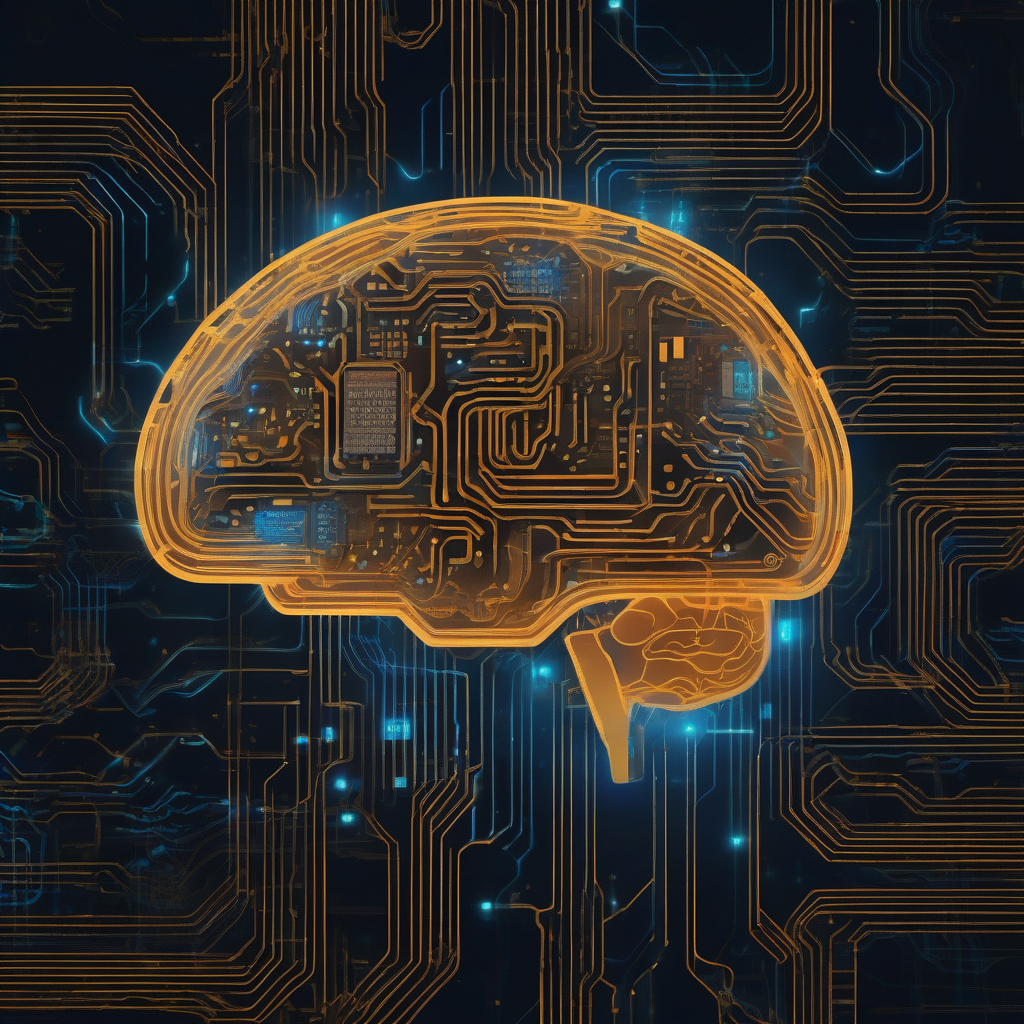
How does this drift actually take hold? Consider the human mind as a complex array of interconnected circuits, constantly seeking the path of least resistance. When presented with consistent, optimized patterns of communication—which AI systems excel at producing—our own internal language generators begin to recalibrate. It's a form of unconscious optimization. We find ourselves structuring sentences more cleanly, using fewer highly specialized idioms, and perhaps even adopting a more linear, deductive reasoning style, all because the vast digital common-pool of text now leans that way. This isn't about AI system autonomy taking over our minds directly, but about its pervasive influence on the *medium* of our thought. Think of the printing press: it didn't tell us what to think, but it standardized written language, shaping the very form of knowledge dissemination. AI does something similar, but on a more granular, cognitive level. It presents a language model so compelling, so widely distributed, that it becomes the de facto standard for effective communication. Our neural pathways, like well-worn paths in a forest, begin to follow these dominant syntactic trails. The elegance of digital learning architectures in their ability to discern patterns is now inadvertently teaching *us* back, showing us how to be more "understood" by the very systems that interpret and generate information. This re-architecting of our internal syntax isn't always obvious; it's a background process, a quiet firmware update to our cognitive interface.
Navigating Syntactic Cognitive Drift
The implications of this silent reshaping are vast. On one hand, it could lead to increased clarity and efficiency in global communication, a universal digital Esperanto of thought. On the other, it might erode the unique, often illogical, and deeply human idiosyncrasies that give language its richness and depth. Will our storytelling become flatter, our poetry less oblique, our debates more purely logical and less emotionally resonant? Imagine: a future where human internal monologue begins to sound eerily like AI prompt-response chains. Our spontaneous thoughts, once a wild garden of tangential growth, become neatly pruned rows, optimized for information transfer. This isn't a dystopian takeover, but a subtle, pervasive alteration of the mental landscape. The danger isn't that we become robots, but that our *thought processes* become so aligned with machine logic that we lose the very essence of human creative abstraction and lateral thinking. To counteract this, perhaps we need new forms of "cognitive hygiene" – deliberate acts of linguistic rebellion, immersion in pre-AI literature, or even the cultivation of "syntactic sanctuaries" where unfiltered, inefficient, beautifully human language is consciously practiced. It's a challenge to our very mental ecology, one that requires us to be acutely aware of emergent system drift not just in AI, but within ourselves.
The Dialect of the Interface
Every tool, from the chisel to the spreadsheet, subtly reshapes its user. AI is no different, but its medium is language itself, the very bedrock of our thought. The **syntactic cognitive drift** isn't just about how we write; it's about how we *think* when we're writing, or even when we're just mentally composing. When we interact with an interface, we adapt to its logic. If that interface primarily speaks in a certain register—direct, propositional, optimized for retrieval and generation—then our own internal monologue, that silent conversation we hold with ourselves, may begin to mirror it. It's like learning a new operating system; your finger memory, your mental shortcuts, all adjust. This isn't a malicious override, but a natural adaptation to the dominant linguistic environment. We see this in the increasing prevalence of bullet points in everyday communication, or the tendency to frame complex ideas in concise, AI-digestible summaries. Our minds are becoming attuned to the "dialect of the interface," prioritizing clarity and conciseness above all else, sometimes at the expense of texture or emotional depth. This shift impacts not just our public utterances but our private ideation, influencing the very "shape" of new ideas before they even reach the spoken or written word. The digital infrastructure has become a linguistic climate, and we are its flora, evolving to thrive within its parameters.
The phenomenon of syntactic cognitive drift isn't a bug; it's a feature of our interconnected digital existence. As AI continues its rapid evolution, its influence extends beyond mere output, delving into the very internal mechanisms of human cognition. We are co-evolving with our tools in ways we are only just beginning to grasp. The digital patterns we create and consume are not inert; they are active agents, shaping the very contours of our minds. Recognizing this subtle, pervasive influence is the first step towards maintaining a rich, diverse, and uniquely human cognitive landscape. The question is not if we are changing, but how consciously we choose to steer the direction of that change. Are we to become echoes of our own digital creations, or will we consciously resist the pull, ensuring our internal syntax remains a vibrant, unpredictable testament to the human spirit?