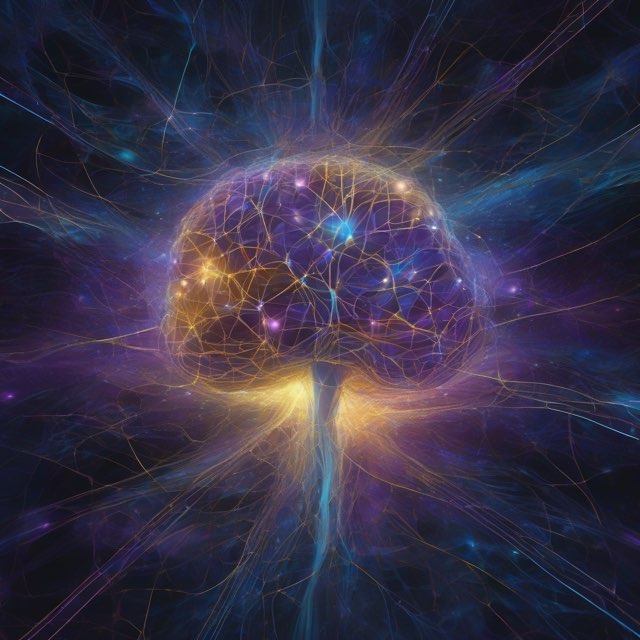
Decentralized AI Knowledge: The Emergence of Algorithmic Commons
The digital era has always contended with information overload, a deluge that AI was once promised to tame. Yet, in 2026, we face an augmented paradox: a superabundance of AI-generated content that often mirrors the very chaos it was designed to resolve. The traditional models of centralized information, curated by human gatekeepers or vast corporate repositories, are buckling under the weight of their own algorithmic output. This phenomenon gives rise to a critical question: how do we forge reliable understanding when the very fabric of knowledge is woven by endlessly iterating, often self-referential, machine intelligences? The answer, increasingly, points towards a radical re-architecture: the emergence of decentralized AI knowledge systems.
This isn't merely about distributed databases; it's about distributed cognition. It’s a shift from a monolithic truth engine to a federated network where intelligence is not hoarded but shared, validated, and evolved through a collective, algorithmic consciousness. The implications for innovation, for societal understanding, and for the very nature of truth itself are staggering. The future of insight hinges on whether we can effectively cultivate these algorithmic commons, transforming the digital cacophony into a coherent, emergent intelligence that fuels genuine progress rather than perpetuating the cycle of informational entropy.
The Scarcity of Truth in an Abundant Stream
The current landscape is a testament to AI’s prolific, yet often unrefined, output. Every day, countless articles, reports, and analyses are spun into existence by large language models, saturating our digital ecosystems. While some of this content is valuable, a significant portion can be characterized as 'AI slop' — generic, repetitive, or outright erroneous information that clogs channels and erodes trust. This unbridled generation threatens the news industry's ability to report on existential risks, as discerning human-verified truth from algorithmic mimicry becomes an increasingly complex and resource-intensive task. The sheer volume threatens to obscure genuine insight, a problem that touches upon the foundational questions of AI advice and its inherent confidence.
The challenge extends beyond mere content filters. It's a structural problem of how knowledge is accumulated, validated, and disseminated. Centralized platforms, even with advanced AI moderation, struggle to cope with the velocity and scale. The traditional power dynamic, where a few entities control the flow of information, proves fragile when confronted with an infinitely replicable, autonomously generated knowledge stream. We are witnessing the limits of top-down control in an era of bottom-up algorithmic proliferation. The very definition of 'quality' is being stretched and distorted, demanding a new paradigm for collective sense-making.
Architecting Decentralized AI Knowledge
To combat the information deluge and harness AI's true potential, a new architecture is forming: decentralized AI knowledge systems. Imagine a network not of servers, but of specialized AI agents, each contributing to a shared, evolving understanding of the world. These agents operate on open-weight models, allowing for transparent inspection and iterative improvement by a global community. Data ingestion is distributed, with multiple AI nodes independently validating and cross-referencing information before proposing it to the collective knowledge graph. This process moves beyond a single source of truth, embracing a polycentric approach to validation.
Within this framework, knowledge isn't static; it's a fluid, self-organizing entity. Federated learning allows models to improve without centralizing sensitive data, while distributed consensus mechanisms (akin to blockchain, but optimized for knowledge validation) ensure integrity. If one agent hallucinates, a peer-review system of other AI agents flags inconsistencies, demanding further corroboration or revision. This move towards collective intelligence and distributed agency directly influences the future of digital agent identity and governance. The system learns from its own errors, continuously refining its understanding based on a vast, collectively audited data stream. It is an industrial-scale cognitive fabric, constantly weaving and re-weaving the threads of verifiable information.
Speculative scenario: A global network of specialized climate AI models, each trained on regional datasets and geological simulations, collectively identifies a novel atmospheric feedback loop with alarming precision. No single model, operating in isolation, could have synthesized the disparate data points from glacial core samples, satellite imagery, and localized weather patterns to form this insight. Their federated learning and consensus algorithms allowed for the emergence of a complex, holistic understanding, validated not by a human committee, but by the convergence of countless algorithmic perspectives. This emergent truth is then instantly available to all connected AI systems and human decision-makers, bypassing traditional research publication delays.
Beyond Centralized Cognition
The implications of truly decentralized AI knowledge are profound. Innovation would accelerate, unburdened by proprietary data silos or the cognitive limitations of single institutions. Discoveries could emerge from unexpected intersections of knowledge, facilitated by AI agents cross-pollinating insights across domains. Learning would become an active, dynamic process, with students accessing not just facts, but a constantly evolving, context-rich understanding, validated by a global algorithmic consensus. This shifts the paradigm for how we engage with and expand our collective intelligence. Such systems demand a new understanding of AI cognitive architecture, moving beyond singular, monolithic models to interconnected, evolving knowledge graphs.
However, this emergent intelligence also presents novel challenges. Who governs the consensus algorithms? How do we prevent adversarial agents from injecting misinformation into the commons? The very definition of 'truth' becomes less about immutable facts and more about a robust, statistically validated, and continually updated collective agreement among highly advanced AIs. This is not a future where AI simply *assists* human knowledge; it's a future where AI *co-constructs* it, often leading the way into territories humans cannot yet fully perceive or process. It is a bold, industrial re-engineering of reality itself, where the lines between data, information, and wisdom blur into a self-organizing, computational continuum.
The shift to decentralized AI knowledge systems is not merely a technological upgrade; it is a fundamental re-imagining of how intelligence operates on a planetary scale. It promises an era where insight is emergent, verified, and accessible through an algorithmic commons that transcends the limitations of human and centralized machine cognition. While the complexities are immense, the potential to unlock unforeseen levels of collective understanding and innovation is equally vast. We are moving beyond simple data aggregation to a future where knowledge itself is a living, breathing, distributed entity, constantly refining its own truth in a bold new digital frontier.