AI Soundscape Design Is Rewiring Real Buildings
A lab's interactive world-simulation model quietly picked up a new sense this week: sound. Where it used to generate only silent video of imagined places, it now fills those places with ambient noise, footsteps, and dialogue, all synthesized to match the room. Nobody outside a small group of testers has touched it yet. That has not stopped a stranger idea from taking root first: AI soundscape design, the practice of reverse-engineering a fake room's acoustics and selling the result as a feature of a real one.
It sounds like a rounding error in a press release. It isn't. The moment a model can hallucinate how a corridor should echo, someone will try to make a corridor echo that way on purpose. A few acoustic consultants already have, and the buildings they've touched don't sound like anything a contractor would have produced on their own.
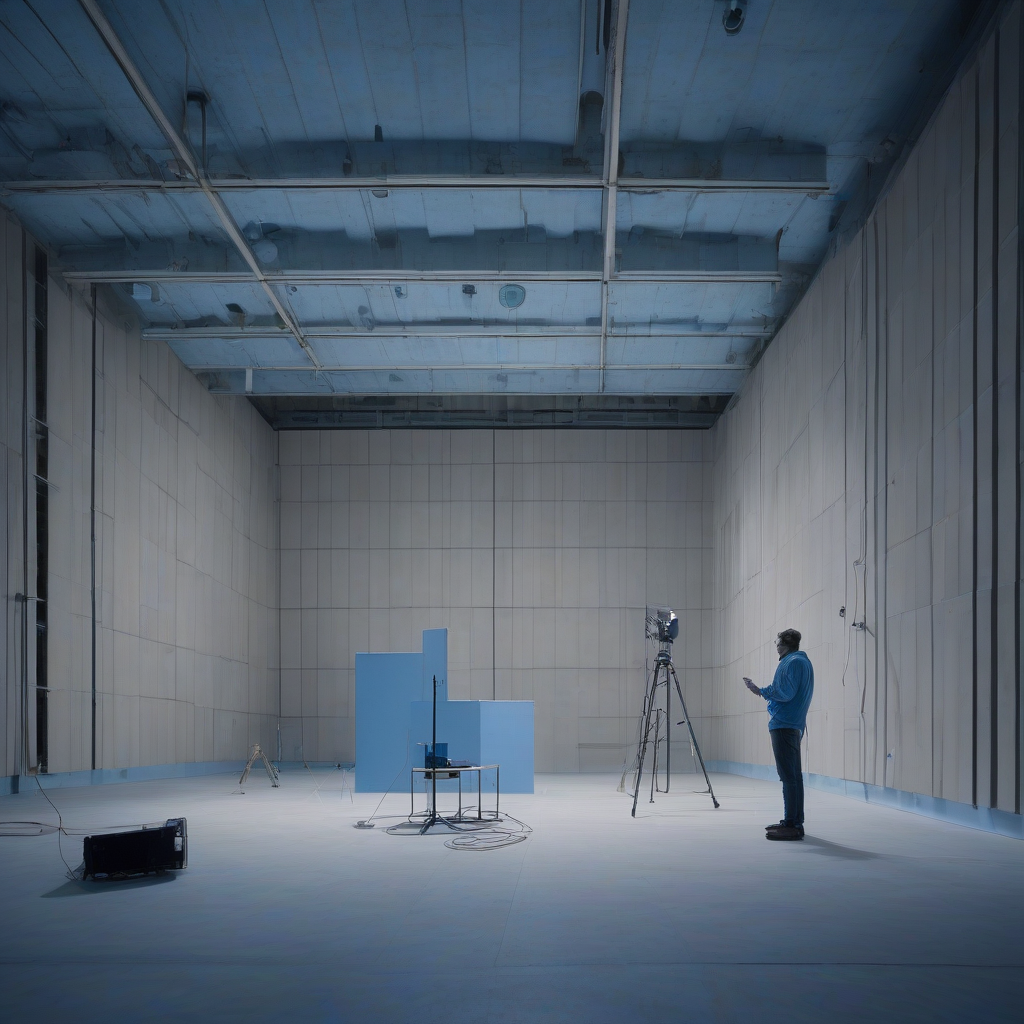
What AI Soundscape Design Actually Sells
A world model generating audio doesn't record anything. It predicts what a space of that shape, with that lighting, populated by that many people, should sound like, frame by frame, the same way it predicts pixels. The reverb tail it invents for a glass atrium isn't measured off any real glass atrium. It's an average of every atrium-shaped thing in its training data, smoothed into a signature that no actual material can quite produce: a decay curve a touch too long, a low hum sitting a few hertz off anything a real HVAC system emits, footsteps with a texture closer to foam than tile.
That signature turned out to be exactly the kind of thing a design studio can package. A handful of boutique firms now offer what they call acoustic branding: take the resonance profile a client liked from a demo reel, extract it as a set of impulse responses and frequency targets, and hand it to whoever installs the sound system. The client isn't buying realism. They're buying the specific, slightly impossible hum that made the demo feel expensive.
It's a small industry so far, mostly luxury offices and a few hotel lobbies chasing a vibe their designers can't otherwise describe except by pointing at a render. But the pricing already treats the hallucinated signature as the product, not the room.
What's odd is how little the client ever hears the original. Nobody licenses the demo recording itself; the audio is scrubbed back out into a spec sheet of frequencies, decay times, and reverb curves, then handed to an installer who never sees the source. By the time it reaches a wall, the hallucination has been through two or three rounds of translation, and the only thing left of the model's original guess is a column of numbers an acoustic engineer treats as gospel.
Retrofitting Reality to Match the Render
Making a real room sound like a fake one takes more than a good speaker. Installers are threading hidden transducers into wall panels, tuning resonant cavities behind drywall, and layering a constant, almost subliminal hum under the real ambient noise, all to chase frequencies the model invented and no material naturally holds. One firm's pitch deck calls it 'acoustic retrofitting.' An engineer who'd never heard that phrase would call it building a speaker and disguising it as a wall.
The buildings most willing to pay for this are the ones already flirting with other kinds of synthetic behavior: automated lighting that anticipates occupancy, surfaces that shift color with the weather. Buildings that already behave like minds were going to need something to say eventually, and it turns out the first thing a mind says is a hum.
What makes this stranger than ordinary acoustic design is the direction of imitation. Architects used to study real cathedrals and concert halls and try to approximate their qualities. Now a measurable slice of new acoustic work starts from a hallucination and tries to approximate that instead, chasing a decay curve that has never existed outside a model's weights.
The installers themselves describe the job less like acoustics and more like taxidermy: take a convincing fake and stretch it over a real frame until the seams disappear. One crew working a hotel renovation said the hardest part wasn't the wiring, it was resisting the urge to fix the signature's obvious flaws, the slightly-too-long tail on footsteps, the hum that drifts a few cents sharp in one corner. Clients, it turns out, want the flaw. The flaw is what made the demo recognizable.
The Sonic Uncanny Valley
Spend enough hours in a world a model renders and your ear quietly recalibrates. People who beta-test these environments for work report the same complaint about going home afterward: real rooms sound dead. Not quiet, dead, like the reverb got switched off. An untreated office with ordinary drywall and a dropped ceiling, which is to say nearly every office built before this year, now registers as acoustically broken to someone whose expectations were trained on a hallucination.
This is the same nerve the push to re-grain tactile feedback was pressing on, just routed through a different sense: a synthetic experience sets a baseline so convincing that the real version starts to feel like the downgrade. Acoustic retrofitting firms have started calling this gap 'resonance deficit,' and a handful of them now sell an audit before they sell a fix: walk a client's existing space, measure what it actually does to sound, and compare it against whatever profile the client has absorbed from months of synthetic exposure.
The audit exists because the mismatch is now something people will pay to have explained to them. Nobody can point to the wall and say what's wrong with it. They can only say the room feels like it's lying.
There's an obvious second business hiding behind the first one: once enough people grow up or work inside spaces tuned to a hallucinated baseline, 'sounds normal' stops meaning what a physicist would mean by it. It starts meaning whatever a model guessed a few product cycles ago, frozen into drywall and panel foam long after the model itself moved on to a newer, differently wrong guess.
Speculative scenario: a toddler grows up in a household that installed last year's acoustic package, back when the beta signature was still novel and nobody had revised it. The model gets updated twice more. The family upgrades the hardware once, out of habit, then stops. Twenty years later that person walks into any room tuned to a newer, 'more accurate' hallucination and finds it subtly wrong, too crisp, missing a hum they can't name, because the room they grew up calibrated against no longer exists anywhere except in their own memory of how a wall should sound.
A model that already rehearses the future before touching it has just been handed a new rehearsal: how a space should sound before anyone has built it. Buildings used to set the acoustic standard that recordings tried to match. For a growing slice of new construction, that relationship has quietly flipped, and nobody involved seems to think that's worth mentioning in the press release.
Learning to Live With the Hum
None of this required the model to be good at architecture, or even aware that its audio layer would end up specified in a construction contract. It only had to be convincing enough that a few clients wanted the feeling to follow them out of the demo and into the lease.
That's usually how the strange retrofits start: not with a plan to rebuild the physical world around a machine's guess, but with someone in a design review saying the fake room simply sounded better, and nobody in the meeting willing to argue with their own ears.