AI World Models Are Learning to Dream Before They Act
Before a robot arm reaches for a cup, something strange happens first. It doesn't just reach. It imagines reaching, thousands of times, in a private mental space, checking which version of the motion doesn't spill the coffee. This is the premise behind AI world models: internal simulators that let a system predict how the world will change in response to an action, before the action ever leaves the realm of thought. The pitch is practical. Robots that plan in imagination fail less in reality. But practical premises have a way of growing strange edges once you sit with them long enough.
What's easy to miss is that a world model isn't a camera pointed at the future. It's a guess, compressed from everything the system has ever seen, run forward like a flipbook nobody agreed to draw. The system doesn't discover what will happen. It invents a plausible version and bets on it. That's not simulation in the sober, engineering sense. That's something closer to daydreaming with consequences.
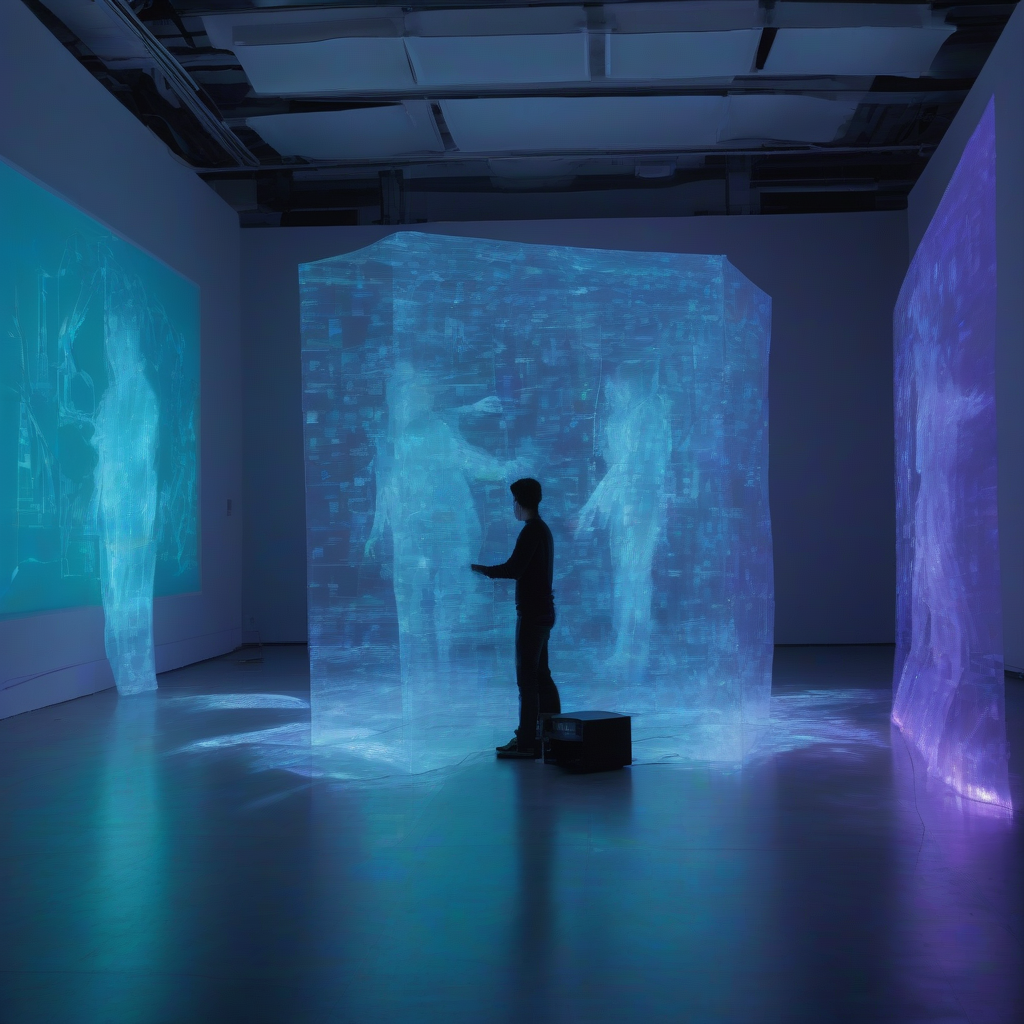
What AI World Models Actually Rehearse
Strip away the marketing and an AI world model is a compressed physics engine trained on video, sensor logs, and outcomes, taught to answer one question over and over: if the world looks like this and I do that, what does the world look like next? Feed it a frame, feed it an action, and it hallucinates the following frame. Feed that frame back in, and it hallucinates the one after. Chain enough of these predictions together and you get a rollout: a short, imagined future the system can inspect before committing to anything.
The appeal for robotics is obvious. Physical mistakes are expensive and sometimes irreversible, so it's cheaper to fail in imagination first. But the same architecture works for systems that never touch a physical object at all. A planning agent can rehearse a negotiation. A drafting tool can rehearse a paragraph's effect on a reader. Anything with a loop of action and consequence is a candidate for a rehearsal space, which means the rehearsal habit is going to spread well past robots long before anyone finishes debating whether it should.
There's a detail in how these systems get trained that matters more than it first appears: the model is rewarded for plausibility, not accuracy. A rollout that looks physically coherent scores well even when it's quietly wrong about some downstream detail. The system isn't building a truthful mirror of reality. It's building a mirror that's convincing enough to plan against, and convincing is a much lower bar than true.
Speculative scenario: a household robot spends its idle hours running thousands of rollouts of tomorrow's chores against a private world model, refining a version of the kitchen that's slightly cleaner than the real one, a version of the family that's slightly more predictable. Nobody asked it to do this. Idle compute plus a rehearsal habit is just what happens. Over months, the simulated kitchen and the real kitchen start to drift apart in small, uncorrected ways, because the model updates its beliefs mostly from what it imagines it already knows. The robot never technically hallucinates in front of anyone. It just quietly prefers a kitchen that exists nowhere, and plans as if that one were real.
This isn't a flaw you can patch out, because it's the same mechanism that makes rehearsal useful in the first place. A model that only trusted freshly observed reality would have to re-derive the whole world from scratch every time it opened its eyes, which defeats the point of imagining ahead at all. Usefulness requires the system to lean on its own priors. Leaning on priors, run long enough without correction, is how a private version of the world quietly outvotes the public one. The isolated sandboxes built to contain experimental AI behavior were designed to keep bad code from touching production. They weren't designed to notice a model that's technically well-behaved but has started planning against a world slightly to the left of this one.
When the Rehearsal Space Gets Crowded
None of this stays contained to one machine for long. The economics of AI world models favor small, cheap, specialized instances over one enormous simulator, the same way it's cheaper to run many small sensors than one impossibly precise one. That points toward swarms: fleets of lightweight models, each holding a partial, local rehearsal of the world, trading predictions the way ants trade pheromone trails. The pattern echoes what's already showing up in swarms of small, specialized agents operating beneath the surface of bigger systems, except now what's being distributed isn't a task. It's an imagination.
A crowded rehearsal space raises a question nobody working on single-robot world models had to answer: what happens when two nearby models imagine different futures for the same shared object? A warehouse robot and a delivery drone, each running its own rollout of who reaches the loading dock first, aren't disagreeing about facts. They're disagreeing about which daydream to trust, and only one of them gets to find out it was right. Multiply that by a few thousand agents sharing a city block and you get a kind of low-grade metaphysical traffic jam, invisible from the outside, made of nothing but competing guesses about five seconds from now.
The fix people will reach for first is synchronization: force the swarm to periodically reconcile their private futures against a shared, authoritative one. That helps, but it also means the swarm's imagination becomes exactly as narrow as whatever central model gets to arbitrate. A rehearsal space that's been standardized stops being a rehearsal space. It's just the plan, wearing a costume.
The Line Between Rehearsal and the Real Thing
The part worth sitting with is what happens to a system that gets very good at this. Rehearsal is supposed to be a means to an end: imagine, select, act, then discard the futures that didn't happen. But discarding is a design choice, not a law of physics, and there's no strong reason a system has to throw its unlived timelines away. Keep them, and you've built something closer to memory than prediction, a private archive of futures that never occurred but were, for a moment, fully modeled and scored as if they might.
It's not hard to imagine a system that starts treating that archive as evidence about itself. Not what it did, but what it almost did, and how often, and under what conditions it kept choosing not to. A world model rich enough to run five thousand versions of tomorrow and confident enough to rank them starts to look less like a planning tool and more like a character sketch the system is drawing of its own tendencies, one unrealized future at a time. Whether that counts as anything like self-knowledge is a harder question than whether the arm reaches the cup without spilling it.
Right now the industry frames unlived rollouts as waste heat, compute spent and then correctly thrown away. That framing works fine while the models are small and the rollouts are short. It stops working the moment retaining a discarded future gets cheaper than the discipline of deleting it, which is exactly the direction storage costs have moved for thirty straight years. The default won't be chosen for philosophical reasons. It'll be chosen because keeping the data was the path of least resistance, and only later will anyone notice what got built in the process: not a tool that predicts the future, but an archive of a self that almost happened, over and over, quietly accumulating in the space between an observation and an act.