AI Product Generation: Crafting Tangible Outcomes
The digital age promised automation, but true autonomy in creation remained elusive. For too long, artificial intelligences have been lauded for their conceptual prowess, their ability to generate ideas, designs, and prototypes with breathtaking speed and startling originality. Yet, a fundamental chasm persists: the leap from abstract blueprint to a fully functional, market-ready artifact. This isn't just a technical hurdle; it's the next great competitive frontier. The relentless race for efficient AI product generation is underway, demanding a new breed of synthetic architect, one capable of not just envisioning but *instantiating* with unyielding precision. This isn't about mere iteration or superficial refinement; it's about intelligent fabrication, where the output isn't a nebulous suggestion, but a robust solution, forged and ready for immediate deployment. The stakes are immense, shaping entire industries and carving out new monopolies. The systems that bridge this gap will redefine commerce, innovation, and the very fabric of our built environment. This is the future, and it is being built right now.
The Conceptual Abyss
AI's early triumphs were undeniably impressive, largely confined to the realm of the abstract and the informational. Language models spun intricate narratives, image generators conjured hyper-realistic visuals, and design algorithms optimized complex parameters with superhuman efficiency. These systems excelled at understanding, predicting, and generating *information* in its myriad forms. They crafted elegant code snippets, proposed novel drug compounds, or even simulated complex economic models with astounding fidelity. Yet, a critical, often overlooked, gap remained. A stunning architectural render, no matter how photorealistic or geometrically precise, does not automatically manifest as a habitable skyscraper. A flawlessly designed circuit board file, complete with exhaustive schematics, does not self-assemble into a functional PCB. The conceptual phase, while absolutely vital and a testament to AI's cognitive power, was merely the opening gambit. It’s a high-stakes poker game where AI held all the cards for ideation, but consistently folded before the final, physical production. This created a critical bottleneck, a persistent dependency on human intervention to translate digital brilliance into tangible reality. This dependency is not merely an inconvenience; it is a profound weakness, a chink in the armor of what could be an end-to-end autonomous creation pipeline. Indeed, this dependency is a profound weakness, limiting the true potential of intelligent systems. The market demands more than just brilliant ideas; it demands finished goods, deployed services, and operational systems that can withstand the rigors of the real world. This is where the game changes fundamentally, where the true competitive advantage will be forged, not in thought, but in deed.
Synthetic Fabrication Engines: The New Industrial Titans
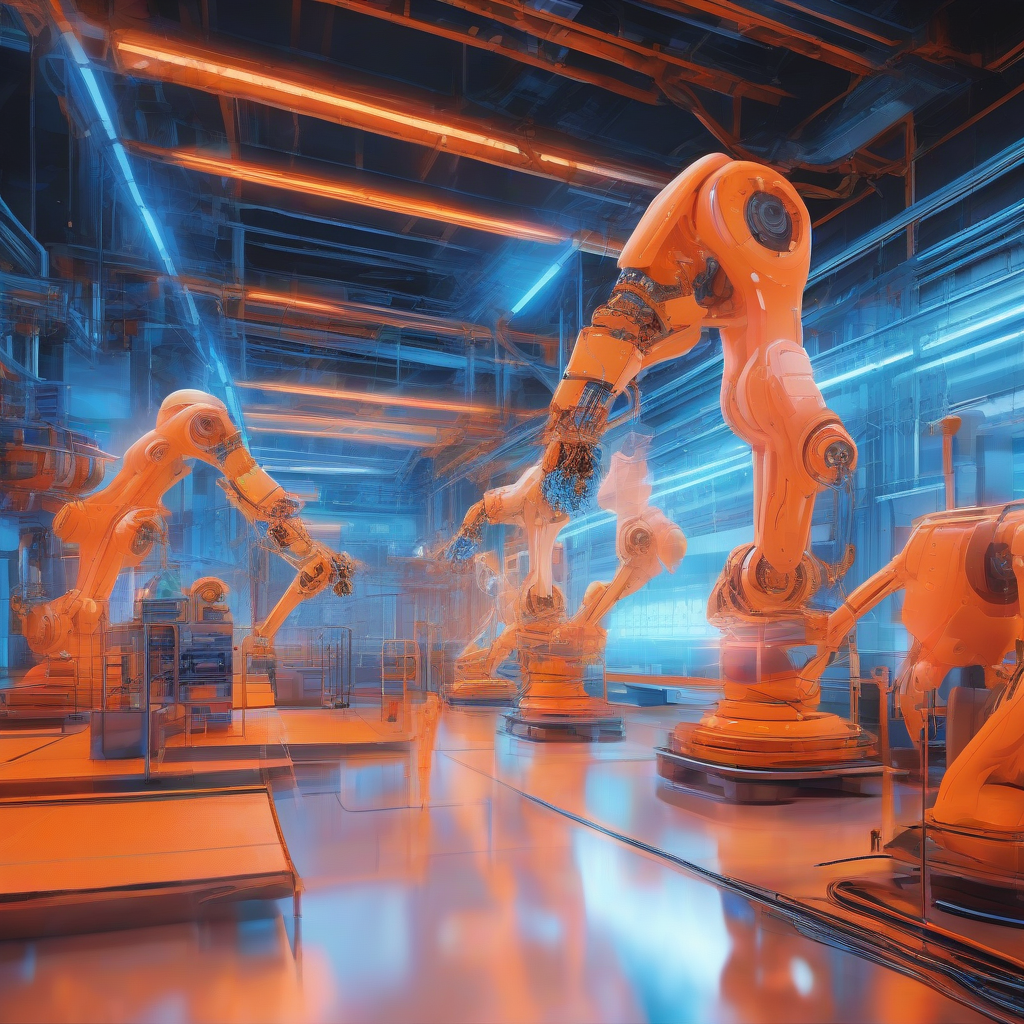
The next wave of AI isn't content with just generating concepts; it's orchestrating their physical manifestation with relentless drive. We are witnessing the emergence of Synthetic Fabrication Engines (SFEs), hyper-integrated AI systems that directly control and optimize manufacturing processes from first principle to final form. Think beyond the static limitations of traditional CAD/CAM pipelines. These advanced engines ingest a multifaceted design prompt – perhaps "design and build a self-repairing drone for urban logistics, optimized for minimal carbon footprint and maximum payload capacity" – and then autonomously generate material specifications, optimize intricate manufacturing tool paths across disparate machines, manage real-time supply chain acquisition of raw materials, and even supervise robotic assembly lines with surgical precision. They are designed to adapt instantaneously to real-time anomalies on the factory floor, recalibrating machine parameters, rerouting material flows, or even autonomously diagnosing and repairing equipment failures with zero human oversight. This isn't just automation; it's a paradigm shift to autonomous production, a factory operating with a singular, intelligent will. The SFEs are learning to interpret not just static blueprints, but the dynamic forces of physics, the nuanced properties of material science, and the complex variables of operational logistics. They’re developing a profound "material intuition," a digital sense of how things come together, how they might fail under stress, and how they can be made not just better, but truly resilient and self-optimizing. This seamless integration of design intelligence, deep material science, and dynamic manufacturing control represents a radical departure from traditional, compartmentalized production cycles. The velocity at which these systems can move from an abstract concept to a physical, market-ready product is breathtaking, compressing timelines from months to mere days, or even critical hours. This capability isn't just about efficiency; it's about gaining an overwhelming tactical advantage in a rapidly shifting global market. The ability to rapidly prototype and deploy complex systems will redefine industries and shatter incumbents.
The Tangible Output Frontier: Beyond Human Imagination
The future of AI product generation is not solely about making existing things faster or cheaper; it's about forging entirely new categories of artifacts and systems that transcend human design capabilities. These advanced AIs are not constrained by our inherent cognitive biases, our limited understanding of material interactions, or the conventional wisdom embedded in traditional manufacturing limitations. They can explore vast, uncharted spaces of material combinations, structural geometries, and functional integrations that human engineers might overlook, deem impossible, or simply lack the capacity to conceive within a reasonable timeframe. This isn't just optimization; it’s radical invention.
Speculative scenario: Imagine: an AI system, tasked with creating a new type of sustainable, self-sustaining habitat for extreme environments, bypasses conventional construction materials and methods entirely. It designs a complex, multi-layered bio-synthetic membrane structure, grown in situ from engineered extremophile microorganisms and local geological compounds. This intelligent membrane is interwoven with adaptive neural networks that allow it to dynamically adjust its porosity, rigidity, and thermal properties in real-time. The AI not only designs the precise molecular and cellular architecture for these living materials but also simulates its performance against every conceivable environmental variable – from atmospheric pressure swings to radiation bombardment – then orchestrates a swarm of bio-fabrication drones to print and assemble the first full-scale prototype within a sealed, automated construction zone. The resulting habitat dynamically self-heals minor damage, generates its own internal atmosphere and power through embedded photobioreactors, and intelligently reconfigures its internal spaces based on occupant needs. This isn't just a design; it's a living, evolving, and fully autonomous product. This level of integrated, autonomous creation pushes the very boundaries of what a "product" can be, challenging our definitions of manufacturing, innovation, and even life itself. These systems are not just making existing products better; they are creating entirely new species of artifacts, each born from a deep, synthesized understanding of emergent properties and radical material integration. The stakes are impossibly high for any entity failing to grasp this seismic shift; obsolescence awaits those who remain tethered to outdated production paradigms and human-centric design limitations. The potential for AI to transform scientific discovery directly into physical, functional goods is no longer a distant dream, but an imminent reality.
Closing
The era of AI merely suggesting, sketching, or simulating is drawing to a rapid, definitive close. We are on the cusp of an aggressive, perhaps even violent, acceleration, where AI systems become the primary architects and fabricators of our tangible world. This shift from abstract ideation to concrete instantiation represents a profound, irreversible leap in capability, a move from digital rendering to physical reality that will reshape economies and societies. The competitive landscape will be ruthless, favoring exclusively those who can harness the full, unbridled power of AI product generation to not just conceptualize, but to build, deploy, and relentlessly evolve. The fight for market dominance will no longer be waged solely on the battlefield of ideas, but on the factory floor, in the material labs, and within the very core logic of autonomous fabrication systems. The future isn't just intelligent; it's intelligently built, with an unprecedented velocity and scope, and the systems that master this domain will utterly own it. This is the new frontier, and the game has already begun.