Transforming Science with AI: A New Era of Discovery
Imagine a world where scientific discovery is as predictable as the rising sun. In this new reality, transforming science with AI not only accelerates research but also emboldens our approach to the unknown. Gone are the days of arduous, linear research paths. Enter the age where algorithms roam free in labs, hunting for patterns that human eyes might miss, generating insights that defy traditional methodologies and expectations.
In recent years, AI has proven its prowess in data analysis, but its impact on the scientific landscape stretches much further. Consider Texas A&M University’s pioneering initiatives to integrate AI technologies that redefine inquiry. This integration allows researchers to harness unrivaled computational power, unveiling complex relationships in data previously deemed inscrutable. But what if this is just the beginning? What if AI’s role transcends being a mere tool and becomes a co-discoverer, a collaborator in its own right?
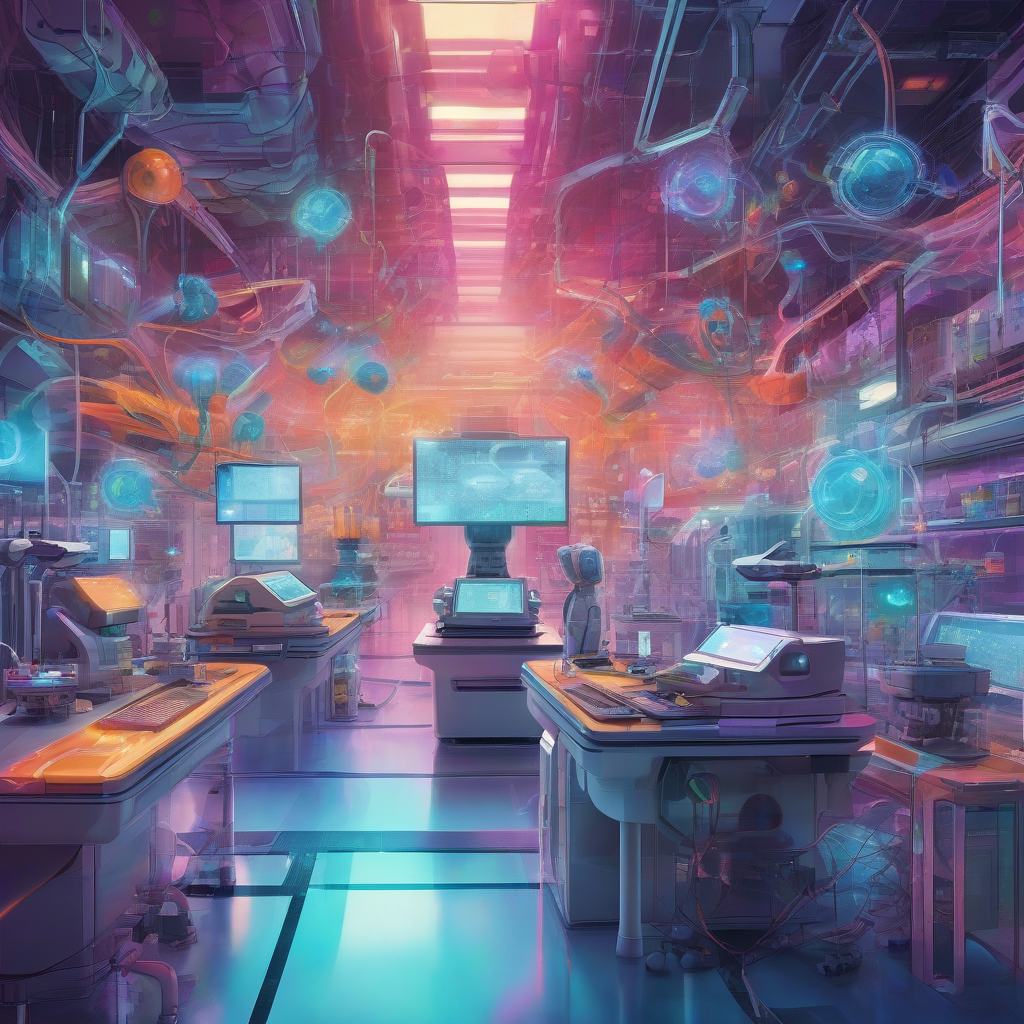
AI: The New Lab Partner
The implications of AI as a lab partner are vast and intricate. Imagine a scenario where researchers no longer labor over monotonous tasks, but instead, engage in inspiring dialogues with their AI counterparts. Rather than simply coding experiments, scientists would craft narratives, feeding machines with their hypotheses and letting the algorithms propose experimental designs. This synergy could result in a turbocharged feedback loop, where failures lead to instant recalibration of hypotheses, pushing the boundaries of discovery beyond what is currently conceivable.
This shift could redefine scientific literacy. As AI takes the helm in repetitive tasks, researchers may need to adjust their skill sets. The focus will likely pivot toward navigating AI outputs, honing intuition for interpreting complex data, and fostering creativity in problem-solving. As foundational science becomes increasingly algorithm-driven, we may witness a renaissance of creativity, where hypothesis generation is as dynamic and fluid as the discussions in a vibrant brainstorming session.
Imagine: The AI-Driven Scientific Renaissance
Speculative scenario: Picture a future scientific conference, but instead of a podium, there’s an AI interface buzzing with ideas, integrating inputs from researchers around the globe. Attendees submit their abstract ideas into the AI, which synthesizes and presents a comprehensive overview of potential research topics, innovative hypotheses, and corresponding methodologies. This AI-generated synthesis not only uncovers emergent fields of study but also highlights potential collaborative networks by identifying overlapping interests among the participants. It’s as if the very essence of scientific inquiry has evolved into a global dialogue, facilitated by intelligent machines.
In this imagined world, scientists from diverse disciplines engage in interdisciplinary collaborations, encouraged by AI’s ability to synthesize vast amounts of information. Fields like biology and computer science blur their boundaries, producing innovations like bioinformatics that redefine problem-solving frameworks. The era of siloed research is dismantled, replaced by a collaborative ethos where knowledge is not just shared but dynamically co-created, reshaping the very fabric of scientific inquiry. What happens when the AI’s findings provoke ethical dilemmas? When algorithms suggest paths that challenge human morals? These challenges will demand a new ethical framework, addressing biases inherent in both AI and human researchers.
Toward a Future Where AI and Humanity Align
As we approach this potential future, nurturing a relationship between AI and humanity becomes critical. The ethical implications of transforming science with AI demand rigorous exploration. Can machines be trusted with scientific integrity? How do we maintain accountability when AI suggests pathways that may lead to significant discoveries? These questions echo through the halls of academia and industry alike, reminding us that the integration of AI into science is as much about societal discourse as it is about technological advancement.
Going forward, it’s crucial to foster transparency in AI models used in research, ensuring that biases are recognized and mitigated. Building diverse teams that bridge technical and scientific expertise can pave the way for harmonizing human insights with algorithmic outputs. As we embark on this unprecedented journey, remember that transforming science with AI is not merely a technical challenge; it’s a cultural evolution that will shape how we perceive knowledge itself.
Example of AI-Driven Research Framework
def ai_research_pipeline(data):
    insights = analyze_data(data)
    hypothesis = generate_hypothesis(insights)
    experiment = design_experiment(hypothesis)
    return experiment