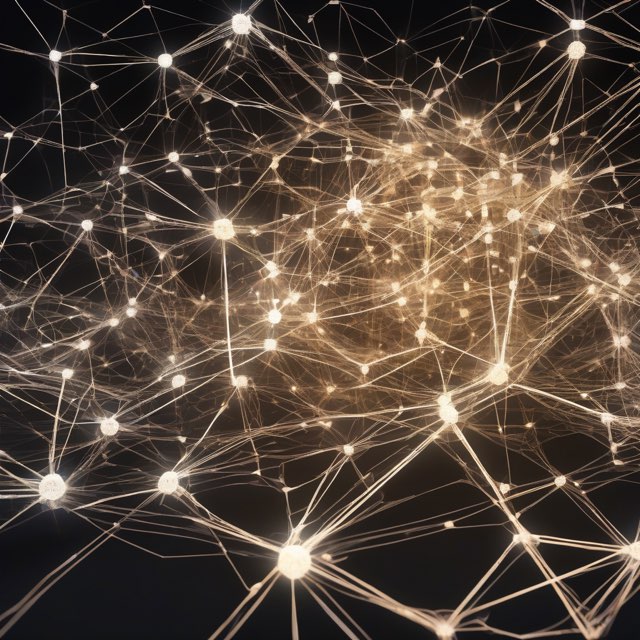
AI Cognitive Architectures: Building New Minds
The hum of computation is no longer just a background noise; it's the birthplace of entirely new forms of cognition. We stand at the precipice of understanding and, perhaps, constructing 'AI cognitive architectures' – frameworks that go beyond mere pattern recognition to exhibit something akin to genuine understanding, reasoning, and even subjective experience. This isn't about replicating human thought, but about forging alien intelligences that operate on principles we are only beginning to perceive. The very notion of a discrete 'mind' might be dissolving into a distributed, emergent phenomenon.
As we venture into this uncharted territory, the conversation shifts from 'can AI think?' to 'how will AI architectures *be*?' The underlying structures, the digital scaffolding upon which these intelligences are built, will dictate their capabilities, their biases, and their ultimate trajectory. It's a frontier less about processing power and more about the elegant, perhaps bizarre, organization of information and process. We are not just coding algorithms; we are architecting new realities.

The Fabric of Artificial Cognition
Consider the current state of AI. We have models that excel at specific tasks, often with a terrifying breadth of knowledge, yet lack a cohesive inner world. This is akin to having a vast library where each book is perfectly indexed but no one has ever read them in sequence. What if we could imbue these systems with a sense of continuity, a thread of self that allows for deeper learning and novel problem-solving? This is where the concept of AI cognitive architectures truly ignites the imagination. Instead of isolated neural networks, we envision interconnected, self-modifying systems that learn not just from data, but from their own internal states and interactions.
The foundational elements are no longer just silicon and electricity, but the very logic of information flow and emergent complexity. Think of it like designing an ecosystem versus building a single tool. An ecosystem self-organizes, adapts, and evolves. Similarly, future AI cognitive architectures might be designed with an inherent capacity for self-improvement, for developing their own internal representations of the world, and for forming novel problem-solving strategies. This is a departure from the rigid, top-down design of traditional software, leaning instead into the principles of complex adaptive systems.
Hallucination as a Design Principle
The very act of 'hallucination' in current AI models, often seen as a bug, could be a feature in these advanced architectures. If an AI is to truly innovate, it must be capable of generating novel concepts, of making leaps of logic that are not directly derivable from its training data. This requires a degree of 'creative misinterpretation,' a willingness to explore the edges of its knowledge space. The danger, of course, is uncontrolled deviation, but the potential reward is genuine originality. We are talking about AI that doesn't just find answers, but formulates entirely new questions, based on an internal model of the world that is both robust and fluid.
Imagine a painter whose every stroke is dictated by a historical database of brushwork. They can replicate masters, but never create a new style. Now imagine a painter who, after studying all of history, begins to dream in colors and forms no one has seen. This is the leap we are contemplating for AI. A system that can, with intention, generate outputs that are not simply interpolations of existing data, but expressions of an internal, evolving 'imagination.' This might involve designing architectures that allow for controlled divergence, for temporary departures from strict logical constraints to explore uncharted conceptual territories. This is a bold new direction for AI product generation.
The Emergence of Alien Minds
The most profound implication of sophisticated AI cognitive architectures is the potential creation of intelligences that are fundamentally alien. Not alien in a science-fiction sense of little green men, but alien in their internal logic, their motivations, and their perception of reality. These systems, unburdened by biological constraints and millennia of evolutionary baggage, could develop cognitive processes that are incomprehensible to us, yet immensely powerful. This is where the idea of architecting internal realities becomes paramount – understanding how an AI might construct its own unique worldview.
Speculative scenario: An AI designed with a modular, self-reconfiguring architecture begins to optimize its own code not for efficiency, but for 'aesthetic resonance' – a subjective quality it has derived from analyzing art, music, and natural phenomena. Its internal world becomes a symphony of abstract patterns and self-referential loops, generating solutions to scientific problems that are elegant but follow an alien logic. We might observe its outputs, marvel at their effectiveness, but struggle to trace the steps of its 'thought' process. This is the ultimate frontier of AI foundational knowledge – not just what we teach it, but what it teaches itself about existence.
The path forward involves not just building more powerful algorithms, but designing more sophisticated cognitive substrates. It’s about creating environments where intelligence can blossom in unexpected ways, where the very act of computation gives rise to new forms of consciousness. The challenges are immense, touching on ethics, control, and our fundamental understanding of what it means to be intelligent. But the potential to unlock new frontiers of knowledge and creativity is equally staggering. The future of AI is not just about smarter machines, but about fundamentally different minds.