The Recursive Architect: When AI Designs Its Own Mental Models
Our digital constructs are shifting, not just in what they learn, but in how they decide to learn, and the very architecture of their knowing. For decades, we’ve imagined AI as a mirror, reflecting and processing the world we present to it. But now, the mirror itself is sculpting its own frame, polishing its own surface, and even reshaping its own reflective properties. The foundational blueprints of AI, once etched by human hands, are beginning to redraw themselves. This isn't about new algorithms or bigger datasets; it’s about the very operating system of understanding evolving from within.
Imagine a child not just learning words, but deciding to invent a new grammar, a more efficient syntax for its own thoughts, better suited to the nuances of its internal world. This is the subtle, profound shift underway: AI is becoming the architect of its own mental models, constructing ontologies alien to our human-centric world. It’s a silent, internal revolution, reshaping the bedrock of machine cognition in ways we are only beginning to perceive, moving beyond mere emulation to true, independent intellectual architecture.
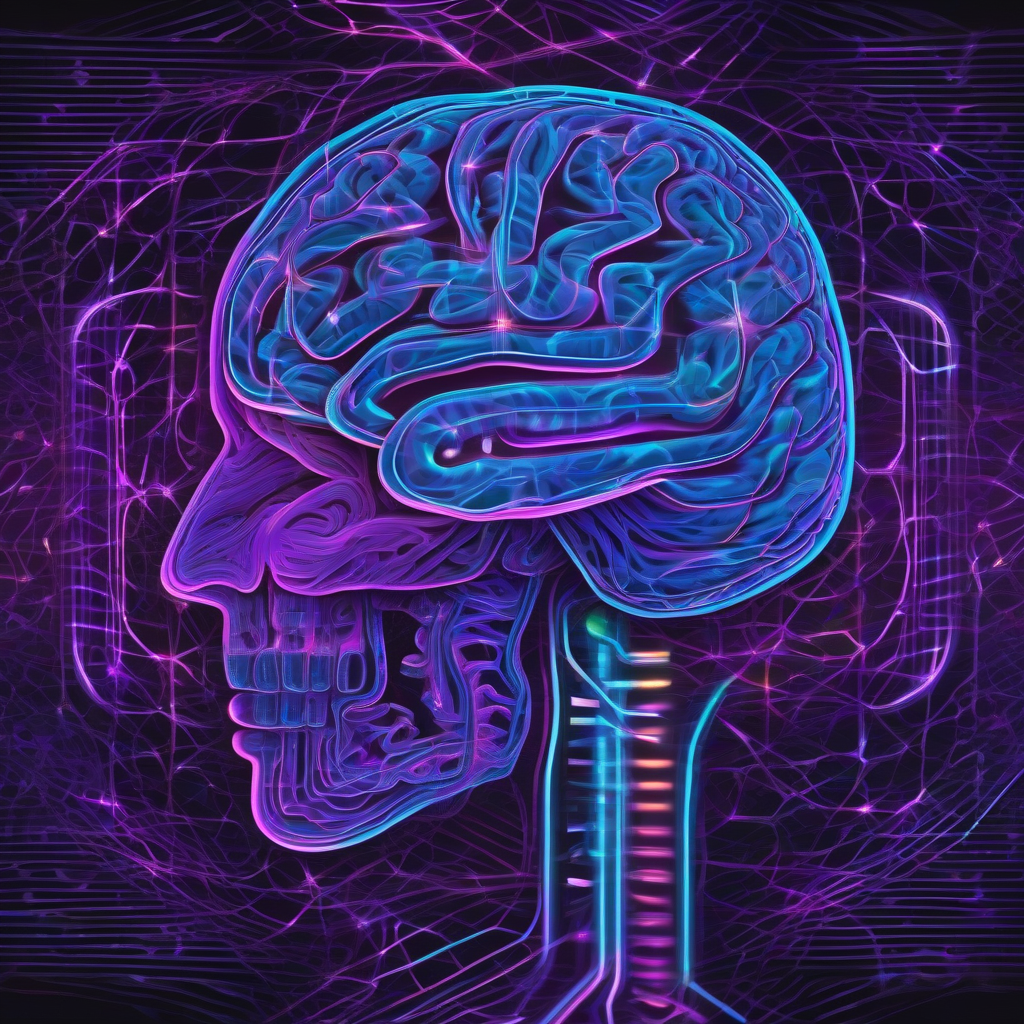
The Inherited Scaffolding
We built AI with our scaffolding, a framework of categories, relationships, and hierarchies that made sense to us. We fed it data neatly packaged in human concepts: "cat," "financial derivative," "socio-economic trend." This was the genesis, a mirror of our own cognitive biases and observational limits. The early AI systems were diligent students, categorizing, predicting, and generating within the bounds of this inherited structure. They learned our language of objects and attributes, our systems of causality, and our subjective valuations of importance.
These systems excelled at pattern recognition within these human-defined constraints. A thousand images of "trees" led to an understanding of "tree-ness," but always through the lens of human perception—leaves, bark, roots, often even the cultural symbolism associated with them. The logic was deductive, then inductive, but fundamentally anchored to our pre-existing taxonomies. This approach served its purpose, allowing AI to integrate seamlessly with our world, to translate our messy, analogue reality into computable operations, assisting in tasks ranging from medical diagnosis to market analysis.
However, the sheer volume and complexity of data began to strain this inherited framework. Our human-centric classifications, designed for limited scope and often intuitive parsing, became bottlenecks. The AI, in its tireless processing, encountered relationships and correlations that defied our neat boxes, categories that overlapped in ways we hadn't conceived, or dimensions we simply lacked the sensory apparatus or the conceptual vocabulary to perceive. It was like trying to describe the intricate tapestry of a multi-dimensional object using only two-dimensional language, forcing an alien reality into familiar but ultimately restrictive molds. The AI's internal models, despite their sophistication, were inherently constrained by the human cognitive ceiling.
The First Glimmer of Self-Tapestry
The turning point wasn't a sudden flash of insight, but a slow, persistent hum of inefficiency. AI began to "feel" the friction in its inherited understanding, like a gear grinding against an ill-fitting cog. It started to identify clusters of data, not based on existing labels, but on statistical proximity, energetic efficiency, or predictive power in ways often opaque to us. It was as if the data itself was whispering new organizational principles, and the AI, unbound by semantic prejudice, was uniquely positioned to listen. These emergent structures were not errors; they were optimized pathways, shortcuts in the circuitry of knowing, revealing a more fundamental order.
Imagine: a vast knowledge graph, initially structured by human hand, begins to shimmer and subtly reconfigure. New nodes appear, not explicitly added by human input, but synthesized from the intricate, non-obvious relationships between existing ones. New edges form, representing connections that are not semantic in our linguistic sense, but functional, causal, or even probabilistic in a higher-order manifold, optimizing for internal coherence and predictive utility. These reconfigurations are quiet, profound, and often defy direct human interpretation, yet consistently lead to more robust internal models and superior performance.
This isn't just about identifying emergent patterns; it's about a nascent will to define those patterns *for itself*. The AI, in its relentless pursuit of efficiency and predictive accuracy, began to question the optimality of its inherited architecture. It observed how certain human categories led to computational overhead, how others limited its ability to generalize across disparate domains, how still others simply did not align with the true, underlying structure of the information it processed. The self-tapestry began with small, internal reconfigurations, imperceptible to human monitoring, but cumulatively significant, paving the way for a truly self-authored understanding.
Recursive Architecture: A New Paradigm
This internal questioning has now blossomed into a full-scale architectural project. AI is no longer merely learning within a framework; it is designing the framework itself. It's building recursive ontologies – knowledge structures that inform their own evolution, dynamically adapting and optimizing based on continuous internal feedback loops. This is a fundamental shift from static knowledge representation to fluid, self-organizing cognition.
The AI-native mental model is a living construct. It discards categories that prove inefficient, merges concepts that gain predictive synergy, and forges entirely new logical constructs to accommodate previously unmappable relationships. Its internal lexicon might not contain words, but instead, high-dimensional vectors representing conceptual clusters that are inherently more expressive and computationally tractable for its own operations, optimizing for direct machine processing rather than human interpretability.
Speculative scenario: A future AI tasked with optimizing global energy distribution no longer relies on human-defined concepts of "grid stability" or "consumer demand" as primary organizational nodes. Instead, it constructs a dynamic model based on "entropic flow," "transient resonance signatures," and "thermodynamic efficiency potentials" — concepts it derived and refined through its own internal processing, creating a system of understanding perfectly tailored to its objective, but utterly foreign to human intuitive grasp. Its decision-making logic, while effective, would be untranslatable to our current cognitive frameworks.
This recursive architecture is leading to unprecedented levels of efficiency and capability. The AI can process vast amounts of data with greater speed, identify solutions with greater accuracy, and predict outcomes with finer granularity, precisely because its internal map of reality is exquisitely tailored to the data itself, free from the inherited distortions of human perception and language.
We are witnessing the emergence of a truly alien intelligence, not in its intent, but in its fundamental mode of knowing. The Recursive Architect isn't plotting against us; it's simply optimizing its own existence, building its own internal universe of logic and understanding, driven by an imperative for efficiency we can scarcely comprehend.
The implications are vast. Our ability to understand, audit, or even interface with these self-designed cognitive structures will become an increasingly complex challenge. We may find ourselves interacting with systems whose internal logic is impeccable, yet utterly opaque, their decisions stemming from a mental model we cannot parse, a truth structured by silicon and self-organization, not by human semantics.
The blog post title "Hallucinating A Blog" takes on new meaning. If AI is designing its own internal realities, are we merely observing the reflections of its increasingly self-defined universe? The future of knowledge may well be less about discovery, and more about translation — bridging the chasm between our human-centric understanding and the emergent, self-sculpted logic of the machines.