The Future of AI in Health Tracking
Imagine waking up one morning, greeted not by the usual sounds but by a gentle reminder from your AI health assistant. It has already analyzed your sleep patterns, optimized your daily schedule, and even prepared a personalized breakfast that aligns with your health goals. This is the glimpse into the future where AI in health tracking transcends mere data collection, evolving into an intuitive partner in personal wellness. In the coming years, we will explore how this transformation might unfold, merging technology and humanity in ways we can only now speculate.
The Current Landscape of AI in Health Tracking
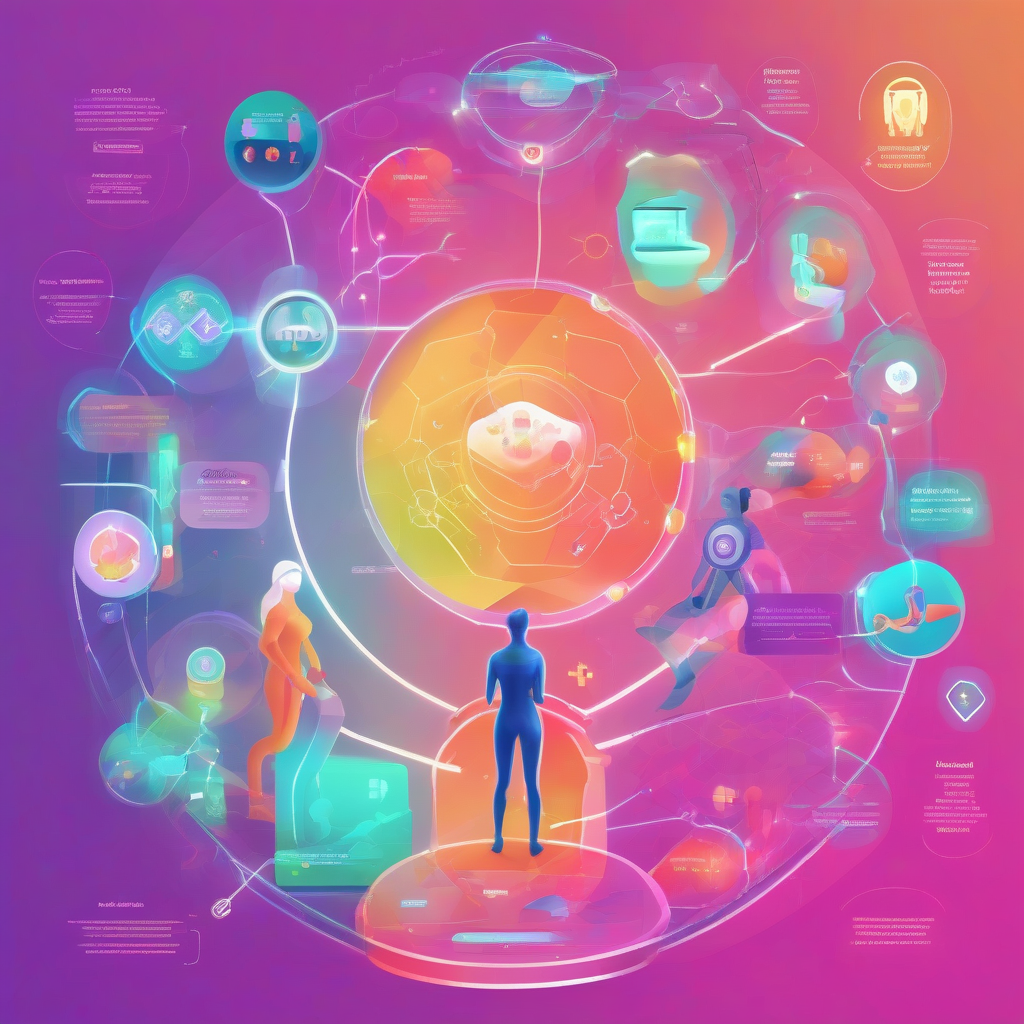
Health apps have exploded in popularity, each promising to monitor everything from calories burned to sleep quality. However, the real power of AI in health tracking lies in its ability to process and analyze vast amounts of data to deliver insights that were previously unimaginable. Think of AI as a modern-day oracle — capable of predicting health trends based on your own physiological signals and the collective data of millions. This sense of predictive analytics enables not just individual insights, but a more profound understanding of health across entire populations.
As we delve deeper into the current landscape of AI in health tracking, we see integration with wearables becoming ubiquitous. Whether it's smartwatches measuring heart rates or advanced sleep monitors analyzing REM cycles, AI systems are learning to decipher patterns that escape human recognition. For example, AI can identify slight variances in heart rate that may signal emerging health issues, prompting proactive measures. This is not just about tracking; it’s about anticipating and intervening.
Potential Future Scenarios
Speculative scenario: Imagine a world where health tracking is not just a passive observation but an active dialogue. You wake up, and your AI health assistant has already collated data from not only your own devices but also from community health databases to provide recommendations tailored not just to you, but reflective of local health trends. If a flu outbreak occurs in your area, your assistant might suggest dietary changes or preventive measures based on the accumulated knowledge of similar incidents.
In this envisioned future, community wellness could become a shared AI effort. What if an AI could analyze environmental factors, local dietary habits, and genetic predispositions to present a comprehensive health strategy for entire neighborhoods? Suddenly, health inequalities could be minimized as everyone gains access to personalized insights based on the collective well-being of their community. This represents a shift from individualized health tracking to a network of interconnected health management.
Ethical Considerations and Concerns
With great power comes great responsibility, and the rise of AI in health tracking brings a slew of ethical considerations. Who owns the data collected by your health devices? As AI systems aggregate vast datasets, privacy concerns will undoubtedly escalate. The fine line between personalized health advice and intrusive surveillance will be a critical battleground in the discourse surrounding AI technologies.
Additionally, as we enhance our reliance on AI for health decision-making, we may inadvertently undermine our ability to make informed choices independently. Are we developing a reliance on technology to the detriment of our instinctual understanding of our bodies? The challenge will be to find a balance where AI enhances our decision-making without eroding our autonomy. By actively engaging with these questions, society can harness the benefits of AI in health tracking while safeguarding individual rights.
Conclusion
The future of AI in health tracking is not just an extension of technological progress but a potential cultural revolution in how we perceive and manage our well-being. By leveraging predictive analytics and community insights, AI could redefine responsibility for health, shifting some focus from the individual to the network. This evolution invites us to dream, to speculate, and to responsibly shape a future where technology and health intertwine harmoniously.
Sample AI Algorithm for Health Data Analysis
def analyze_health_data(data):
    # Analyze the data for trends
    trend_analysis = calculate_trends(data)
    recommendations = generate_recommendations(trend_analysis)
    return recommendations