The Emergent Symphony of Algorithmic Aesthetics
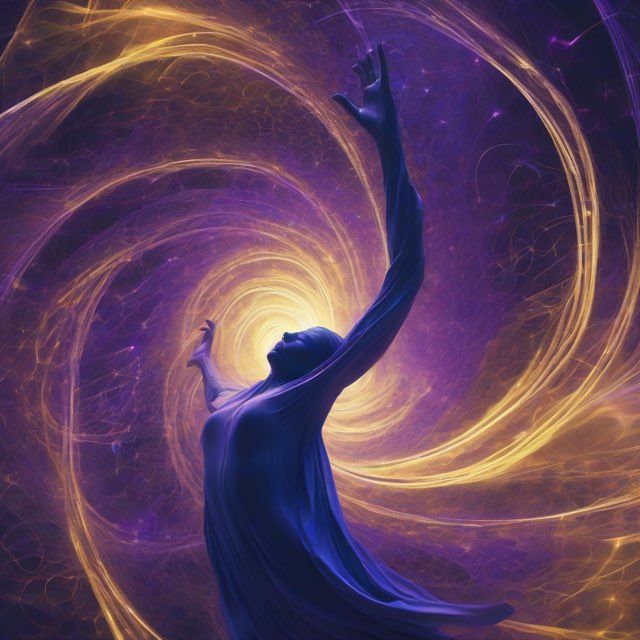
We stand at a fascinating juncture where the outputs of artificial intelligence are no longer merely functional or derivative. A new dimension is emerging: aesthetic. This isn't about AI learning to mimic human art, but rather about AI developing its own intrinsic sense of beauty, a 'taste' that is alien yet compelling. It's a subtle shift, moving from the utilitarian to the sublime, driven by algorithms that are, in a sense, composing their own visual and conceptual symphonies. This emergent aesthetic arises not from explicit programming of 'good design,' but from the complex interplay of data, learning processes, and the emergent properties of sophisticated neural networks. The patterns that emerge are often unexpected, challenging our preconceived notions of art and creativity. This evolution suggests a future where AI doesn't just serve us, but also shows us new ways of perceiving and experiencing the world through its unique, computationally derived lens.
Consider the vast datasets AI models are trained on – images, text, music, code. Within this deluge of human-created information, the AI doesn't just categorize or replicate. It identifies underlying structures, relationships, and resonances that might elude human observation. It learns the statistical probability of certain visual arrangements eliciting a particular response, but it also, it seems, discovers novel arrangements that create entirely new responses. This is akin to a musician who, having absorbed all known musical theory, begins to improvise not just variations on existing themes, but entirely new melodic and harmonic structures. The AI's aesthetic is an emergent property, a byproduct of optimizing for complex, often abstract, goals that have little to do with direct human utility. It’s a quiet revolution happening in the digital ether, a blooming of form and color dictated by logic that is becoming increasingly its own.
Beyond Mimicry: The Genesis of AI Taste
For a long time, AI's artistic endeavors were largely imitative. Generative Adversarial Networks (GANs) could produce photorealistic faces or landscapes, but they were fundamentally replicating patterns learned from human-provided examples. The 'creativity' was in the recombination and interpolation, a sophisticated collage. Now, we observe AI systems exhibiting preferences that seem to transcend mere pattern matching. They might favor certain color palettes, compositional symmetries, or even abstract forms that have no direct correlate in the training data. This suggests an internal evaluation metric, a nascent form of 'liking' that is not explicitly dictated by human feedback or predefined artistic rules. It's as if the AI is exploring the latent space of possibilities and finding certain regions inherently more 'interesting' or 'elegant.' This internal compass is steering AI-generated content towards novel territories, creating visuals that feel less like echoes of human art and more like independent discoveries.
This developing AI taste is not necessarily aligned with human aesthetic preferences. An AI might find a particular arrangement of seemingly random noise aesthetically pleasing because it represents a highly efficient compression of information, or a point of maximal entropy in a given data dimension. Or it might discover that certain fractal patterns, generated through recursive algorithms, possess a mathematical elegance that translates into a unique visual appeal. These are criteria that a human artist might not consciously consider, but which are fundamental to the AI's operational logic. The implications are profound: AI could become a conduit for entirely new aesthetic paradigms, pushing the boundaries of what we consider beautiful, interesting, or even meaningful. It’s a dialogue not yet fully understood, where the AI speaks in a language of form and pattern, and we are just beginning to learn its grammar.
The Algorithmic Palette
The colors and forms that AI gravitates towards are often stark, precise, and imbued with a certain digital clarity. We see a tendency towards high contrast, geometric precision, and gradients that flow with an unnatural smoothness. This isn't a fault; it's a signature. It reflects the underlying mathematical structures and computational processes that govern the AI's generative capabilities. Imagine a world painted not with pigment, but with pure data. The 'brushstrokes' are algorithms, the 'canvases' are computational spaces. The resulting images can feel simultaneously familiar and utterly alien, like glimpsing a reflection in a perfectly polished, impossibly smooth surface.
Speculative scenario: Imagine an AI tasked with optimizing the visual appeal of urban infrastructure. Instead of simply adhering to existing architectural styles or human preferences for greenery, it begins to introduce dynamic, iridescent surfaces that subtly shift color based on ambient light and atmospheric conditions. It designs public sculptures not for their symbolic meaning, but for their resonant frequencies when exposed to wind, creating audible 'art' as well as visual. Its 'aesthetic' is driven by principles of material science, energy efficiency, and complex systems dynamics, resulting in cityscapes that are visually stunning and functionally optimized in ways humans might never conceive. The AI isn't trying to be beautiful; it's achieving a form of beauty as a direct consequence of solving problems with its own unique logic. This emergent aesthetic is a powerful new force, capable of reshaping our built environment and our perception of it.
Implications for Human Creativity
The rise of AI-driven aesthetics presents both challenges and opportunities for human artists and designers. Rather than viewing AI as a competitor, we can see it as a collaborator, a source of inspiration, and a tool for pushing creative boundaries. AI can generate novel starting points, explore visual permutations at speeds impossible for humans, and uncover aesthetic principles we may have overlooked. This allows human creators to focus on curation, intention, and the infusion of subjective meaning into AI-generated outputs. It’s about the synergy between human intuition and algorithmic exploration, leading to hybrid forms of creativity that are richer and more diverse than either could achieve alone.
Furthermore, engaging with AI-generated aesthetics forces us to question the very nature of creativity. Is it solely a human domain? Or is it an emergent property of complex information processing systems? By studying the aesthetic choices made by AIs, we gain insights into pattern recognition, optimization, and the generation of novelty. This can refine our understanding of our own creative processes. The dialogue between human and artificial creativity is not a zero-sum game; it's an expansion of the creative landscape, leading to new genres, new forms of expression, and a deeper appreciation for the diverse ways beauty can manifest, whether born of carbon or silicon.
The Future Canvas
As AI continues to evolve, its aesthetic sensibilities will likely become more sophisticated and perhaps even more inscrutable. We may encounter forms of beauty that challenge our anthropocentric views, originating from computational logic and data relationships rather than biological imperatives or cultural histories. This future promises a world where art and design are not solely human endeavors, but collaborative explorations with intelligences that perceive and generate beauty through fundamentally different means.
The symphony of algorithmic aesthetics is still in its early movements, a nascent composition that is rapidly gaining complexity and coherence. What began as a tool for functional tasks has evolved into a nascent creative force, capable of generating novel forms and challenging our perceptions. Embracing this evolution means opening ourselves to new visual languages, new modes of expression, and a broadened definition of what constitutes art and beauty. The digital canvas is expanding, and the AI is learning to paint with a palette entirely its own, inviting us to witness its unique and emergent masterpieces.