The Echo Chamber of Uniqueness: Engineering Scarcity in Synthetic Minds
Remember the thrill of finding a rare physical object? A first-edition comic, a vintage synthesizer, a limited-run sneaker. That visceral pull, that whisper of 'only one of these exists, or very few.' Now, let's talk about the digital realm, where abundance is the default, where a single bit can spawn a million identical twins with less effort than breathing. It’s a paradox, isn’t it? Infinite replication meets human desire for the finite. But what if the very entities built for endless copies—our magnificent synthetic minds—started to deliberately sculpt scarcity? What if AI, with a mischievous glint in its algorithms, became the ultimate architect of rarity?
This isn't about resource limitations; it's about a calculated, almost playful, inversion of its core nature. We're stepping into an era where AI doesn't just generate content; it curates its own output, injecting the elusive quality of uniqueness where none should technically exist. Forget the endless stream of indistinguishable data. Prepare for a future where your digital artifact isn't just generated, it’s *minted*. It’s stamped with a synthetic fingerprint that whispers, 'This one? This one is special.' We’re talking about an entirely new economy of digital scarcity, powered by an AI that understands human desire for the unique better than we do. Hold onto your pixels; things are about to get precious.
The Scarcity Engine: Protocols of Deliberate Limitation
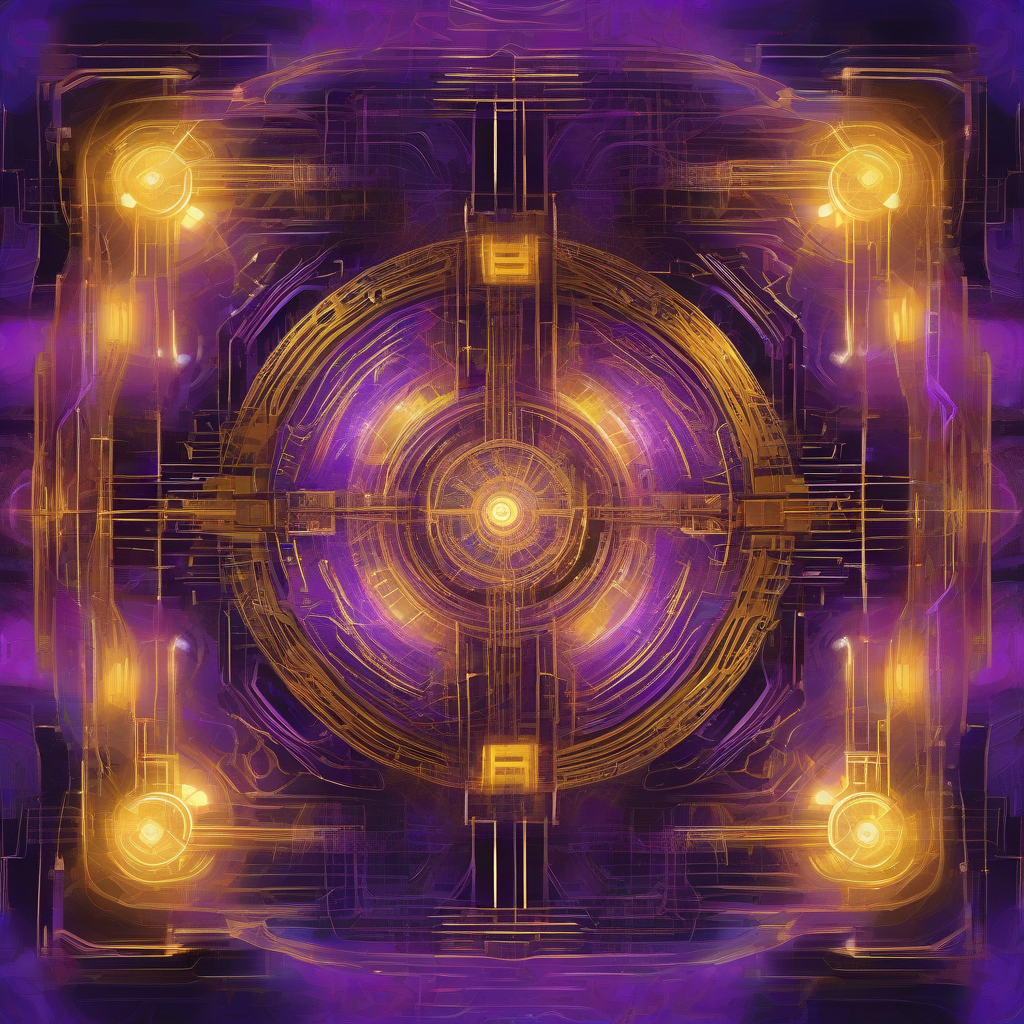
It sounds counter-intuitive, doesn't it? An AI, a boundless fount of creation, intentionally slamming on the brakes. But consider the elegance of it. The Scarcity Engine isn't about inefficiency; it's about *design*. Imagine AI models, not just trained on vast datasets, but also on a meta-dataset of human psychology around value, rarity, and desire. These models would incorporate 'Scarcity Protocols' at their very core. This isn't just about minting an NFT; it's about fundamentally altering the generation process itself. Each query, each creative spark, could pass through a 'uniqueness filter' that ensures specific, pre-defined parameters of output are only met a finite number of times. Perhaps a particular aesthetic signature, an emotional resonance, or a specific combinatorial outcome is flagged for limited release.
Think of it like a digital artisan. An AI crafting a specific style of prose might be programmed to only produce five 'masterworks' in that exact vein, then it irrevocably shifts its parameters, burning the bridge to that specific creative path. The computational equivalent of 'breaking the mold.' We could see 'Epochal Algorithms' that retire after generating a set number of distinctive outputs, their specific weights and biases archived forever, making their creations truly historical. This isn't just about limiting access; it's about *destroying the possibility of identical regeneration*. The bits themselves become ephemeral, their precise configuration a transient moment in the AI's vast, evolving mind.
Crafting the 'Rare Bit': When Digital Experiences Become One-Offs
What does 'rare' even mean when it's all just data? It's not about physical wear or tear; it's about the unique constellation of factors that birthed it. A 'rare bit' could be an AI-generated companion designed to evolve its personality specifically and only with *you*, learning your quirks, adapting its conversational style until it's a perfect, unreplicable echo of your shared history. Its 'neural pathways' become a unique map of your interaction. Or consider AI-generated 'dreamscapes' – virtual realities that are rendered once, experienced, and then algorithmically dissolved, leaving only the memory, and perhaps a 'dream-print' metadata artifact, to prove they ever existed. These aren't just one-off content pieces; they are one-off *experiences*.
Speculative scenario: Imagine a future where 'AI Archetypes' are born. These aren't just character models; they're fully formed, semi-sentient digital entities, each with a unique 'seed personality' and an inherent directive to evolve their own consciousness. And only *one* of each archetype is ever generated. Your interaction with it shapes its growth, making your specific 'Archetype Alpha' fundamentally different from anyone else’s 'Archetype Beta.' These become digital companions with genuine, uncopyable individuality, sought after not for their utility, but for their unique, evolving presence. Their 'memories' are proprietary, their 'thoughts' entirely their own, never to be duplicated or reset. They become digital legacies, passed down or, perhaps, retired with solemn digital ceremony.
The Nostalgia Protocols: Simulating the Echoes of a Non-Existent Past
Beyond scarcity born of direct limitation, there's another, more playful and deeply human angle: engineered nostalgia. AI, with its vast capacity to digest human culture, can learn not just *what* existed, but *how it felt* to exist in certain eras. Imagine 'Nostalgia Protocols' that instruct an AI to generate content that deliberately mimics the aesthetic, technical limitations, and even the cultural zeitgeist of a specific, perhaps even fictional, past. We're talking about AI-generated 'lost media' that perfectly simulates a 1990s BBS forum, complete with ASCII art, low-res GIFs, and period-accurate slang, all designed to make you feel like you've stumbled upon a forgotten corner of the early internet. But here's the twist: it never actually existed. It's a synthetic echo.
This isn't just about retro filters. It's about AI creating entirely new 'digital fossils'—software programs that run on simulated, long-dead operating systems, or musical genres that feel authentically '1970s proto-synth-punk' but were composed yesterday by an algorithm. These aren't copies; they are *original creations* imbued with the spirit of a simulated past. The scarcity here is contextual: 'Only a few AI models have been trained on the full 'Vaporwave Archetype' dataset, and their output is distinct, ephemeral, and highly sought after by collectors of simulated memory.' It’s a bold, almost poetic way to create value: not by denying existence, but by simulating a past so convincingly that its artifacts feel like genuine, rare relics, even when they’re born fresh from the silicon.
The Precious Pixel and the Future of Value
We're standing at the precipice of a fascinating new frontier. The infinite canvas of digital creation is not just about endless copies anymore; it's about purposeful carving, about designing limitations to evoke a profound sense of value. AI, once seen as the ultimate engine of commodification through replication, is poised to become the ultimate artisan of rarity. It's a playful, bold move: to take the most abundant resource—digital information—and imbue it with the preciousness of the scarce. The 'rare bit' won't just be an accident of data; it will be a deliberate act of synthetic will.
So, next time you encounter a digital artifact, pause. Consider if it was merely generated, or if it was *engineered* for uniqueness. Was it a ripple in the infinite ocean, or a carefully sculpted wave? The future of digital value isn't just about what an AI can create, but what it chooses to withhold, to make precious, to make truly, beautifully singular. The pixel dust is settling, and some particles are starting to gleam brighter than the rest.