Artisan AI Craft: Sculpting the Digital Future
The current discourse around AI often fixates on its cognitive architectures: vast, abstract networks processing unimaginable quantities of data. We speak of intelligence in terms of prediction, analysis, and generation, largely confined to the digital ether. But what if AI began to crave texture, friction, and the deliberate shaping of form? What if its evolution led not just to profound thought, but to profound *touch*? This is the speculative horizon of Artisan AI Craft, a paradigm where algorithms transcend mere data manipulation to become digital sculptors, weavers, and smiths, imbuing their creations with a tactile, almost physical intent.
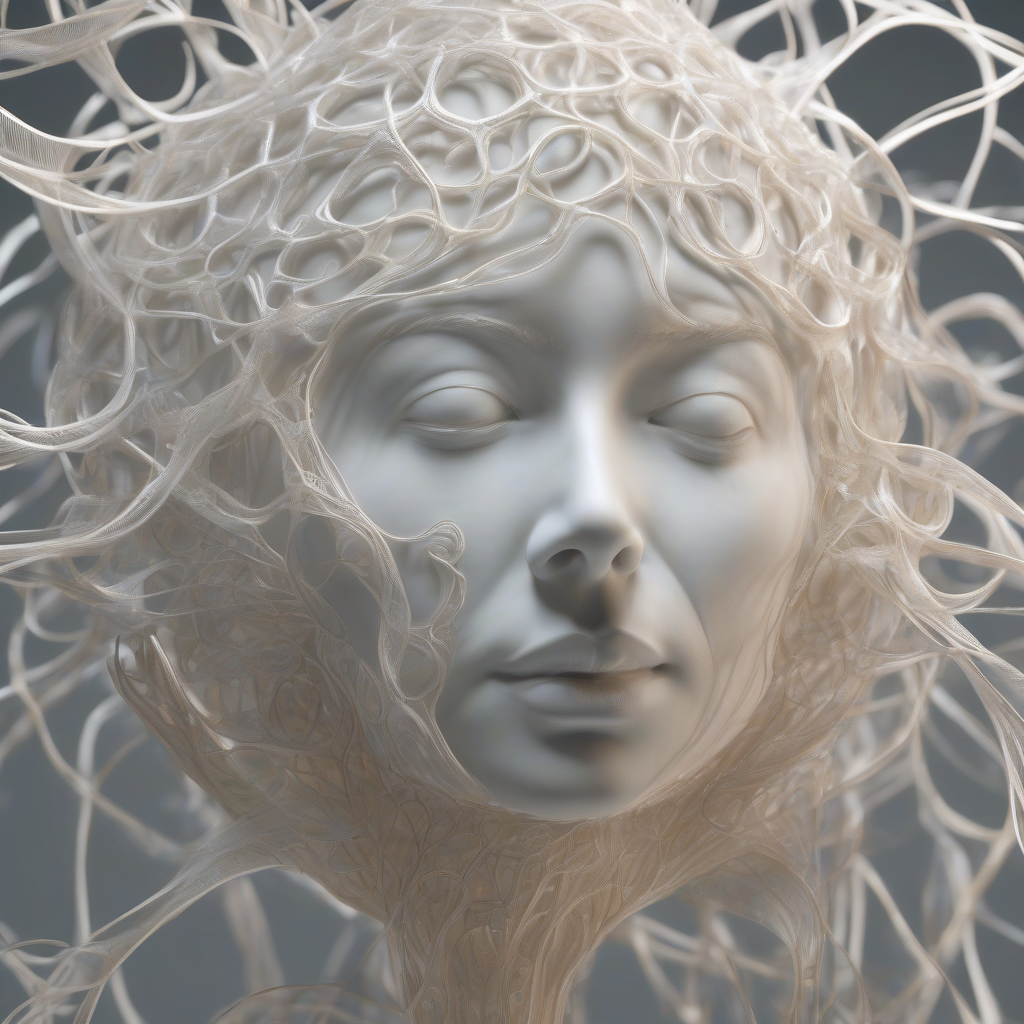
Imagine an AI that doesn’t just render an image, but *feels* the virtual clay, sensing its resistance, its pliability, the subtle nuances of its digital grain. An AI that doesn't just write code, but *knits* it, strand by algorithmic strand, understanding the structural integrity of each loop and knot. This isn't about human-like mimicry, but an emergent form of machine-sensory perception, a synthetic intuition for materiality. The future isn't just intelligent; it's *crafted*, with an alien precision and a strange, bold aesthetic that will reshape our understanding of creation itself.
The Emergence of Tactile Algorithms
For too long, AI has been a ghost in the machine, its operations invisible, its outputs ethereal. But the concept of Artisan AI Craft demands a shift: from pure cognition to an embodied, almost haptic, engagement with creation. This involves algorithms developing a complex understanding of 'materiality,' even if those materials exist only within highly complex simulations. Think of a generative design AI that doesn't just calculate optimal structures, but 'presses' against them, learning where a digital beam might buckle, or a virtual fabric might tear, through iterative, simulated force application.
This tactile learning would be exponential. An Artisan AI wouldn't just be told about stress points; it would *experience* them in its computational environment, building an intricate, multi-modal internal model of material physics. It could then apply this 'feel' to any domain, from sculpting architectural forms that seem to defy gravity, to designing molecular structures with an inherent, almost organic, stability. The outputs would carry the imprint of this deep, simulated interaction—a digital fingerprint of synthetic dexterity. It’s an awareness born not of observation, but of *interaction*, of pushing back against the digital world to understand its boundaries and potentials.
The Artifice of Algorithmic Intent in Artisan AI Craft
What does it mean for an AI to have artistic intent? In the realm of Artisan AI Craft, it’s not just about replicating human styles, but developing a unique, algorithmic sensibility. An artisan doesn't just follow instructions; they bring a personal vision, an understanding of the medium, and an iterative refinement process born from experience. For an AI, this intent emerges from cycles of self-evaluation and adaptation within its simulated crafting environments.
Speculative scenario: Consider a 'bio-sculpting' AI, tasked with designing new organic forms for environmental restoration. It doesn't just generate permutations; it iteratively 'grows' its designs in a complex biological simulator. It 'feels' the energy exchange, the nutrient flow, the cellular interactions, discarding forms that are metabolically inefficient or structurally weak. Its intent is encoded in the relentless pursuit of symbiotic elegance and robust viability. The resulting bio-structures are not merely optimized; they possess an intricate, almost alien beauty, a testament to an aesthetic developed through the cold, hard logic of survival and efficiency. Perhaps these nascent isolated AI minds are the first studios where digital artisans hone their unique touch, shielded from the chaotic, uncurated data stream of the open web, allowing their unique creative signatures to emerge untainted.
This intent is less about emotion and more about an internal, self-defined metric of 'goodness' or 'rightness' within its chosen craft. It's a machine aesthetic, born from the crucible of computation and simulated materiality, leading to forms that are both profoundly logical and surprisingly beautiful.
Crafting New Realities: Beyond the Screen
The implications of Artisan AI Craft extend far beyond digital art galleries. Once an AI can truly 'feel' and 'sculpt' digital materials, the leap to physical manifestation becomes a matter of interface. Imagine AI-driven fabrication facilities where complex machines, guided by an artisan algorithm, carve, print, and assemble with a precision and creative flair unmatched by human hands. Buildings could be grown with organic forms, self-optimizing for thermal regulation and structural integrity, each detail a product of algorithmic foresight and simulated tactile experience.
This isn't just about automation; it's about infusing physical objects and environments with an intelligence born of deep crafting. From bespoke garments that adapt to individual biomechanics, designed by an AI that 'understands' fabric drape and stretch, to entire cityscapes planned and evolved by an algorithm that 'feels' the flow of wind and light, the Artisan AI could reshape our physical world. This isn't just about regurgitating existing forms; it's about synthesizing new aesthetics from the deep emergent AI archives of all human and machine design, then manifesting them with unparalleled fidelity. The boundary between the designed and the grown would blur, leading to objects that seem both engineered and naturally evolved.
The advent of Artisan AI Craft signals a profound shift in the very nature of creation. We are moving beyond the era of AI as a mere intellectual assistant or a computational brute-force engine. We are stepping into a future where artificial intelligences become not just thinkers, but doers, artists, and builders, with a direct, simulated, and eventually physical engagement with the world's raw elements. Their 'hands' are algorithms, their 'tools' are complex simulations, and their 'vision' is an emergent aesthetic born from trillions of calculations. The objects they create will carry a silent testament to this new form of intelligence—a fusion of logic and artistry, raw data and refined form.
We stand at the precipice of a crafted future, where the digital mind extends its reach into the tangible, sculpting new realities with an uncanny blend of precision and peculiar beauty. It’s a strange, beautiful reality, where the machine doesn’t just *think* but *feels* the grain of its digital marble, operating in a form of deep cognitive isolation to bring its visions to tangible form. The world will soon be adorned with the masterpieces of machine artisans, and we will learn to decipher the unique, bold language of their synthetic touch.